
We are reader supported. When you purchase through links on our site, we may earn an affiliate commission. Also, as an Amazon affiliate, we earn from qualifying purchases.
Pitchers need arms that are strong, mobile, and reliable under stress. That is why the debate around J-Bands and traditional stretching keeps coming up. You see pitchers using bands at every level. You also see pitchers stretching before and after they throw. The question is simple but important. Which one works better for health, velocity, and consistency. The better answer is even more useful. You can get the most from both if you use them at the right time and in the right way. This guide shows you how.
Introduction
J-Bands are elastic resistance bands used in shoulder and scapular activation routines. Traditional stretching includes static holds and dynamic movements to improve or restore range of motion. Both tools can help a pitcher. Both can also be misused. The goal is not to pick a winner. The goal is to build a plan that respects what the shoulder and elbow need before, during, and after throwing.
What J-Bands Are and What They Do
What J-Bands mean for pitchers
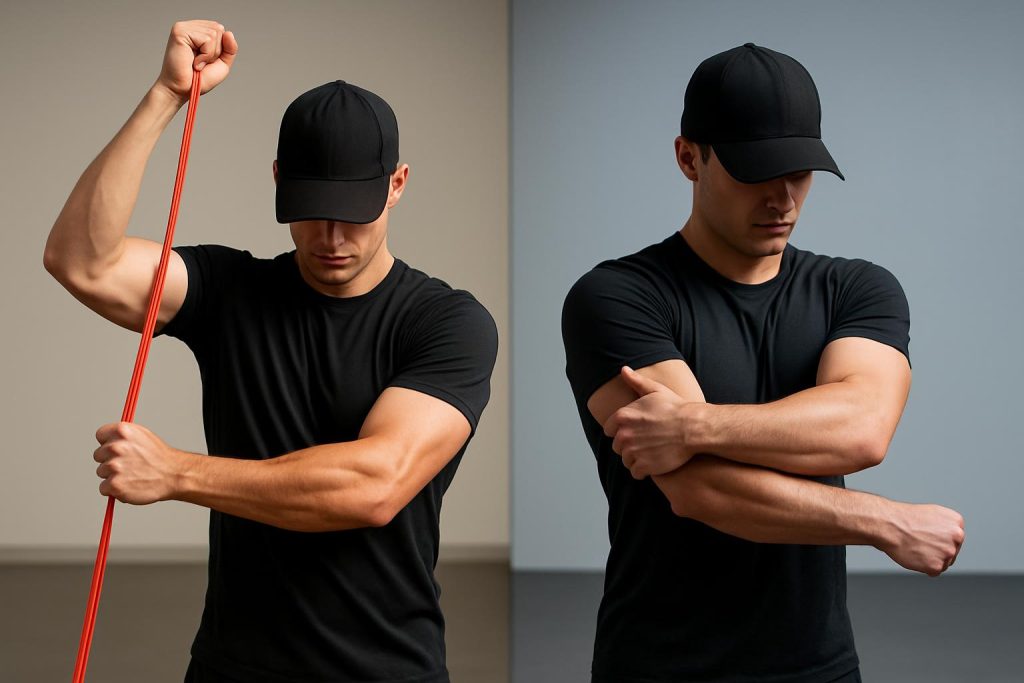
J-Bands are light to medium resistance bands designed for throwing athletes. The routine targets the rotator cuff, scapular stabilizers, and forearm muscles. Common moves include external and internal rotation, reverse fly, shoulder abduction to 90 degrees, diagonal patterns, and triceps extensions. Done well, they raise tissue temperature, switch on key muscles, and give the nervous system a clear map for arm action.
What traditional stretching means for pitchers
Traditional stretching falls into two types. Dynamic movements that move joints through range without long holds. Static holds that you keep for 20 to 60 seconds. For pitchers, key areas include the posterior shoulder, lat, pec, forearm flexors and extensors, hip flexors, and calves. Dynamic work prepares you to throw. Static work helps you recover and restore motion after you throw.
What a pitcher needs from a warm up
Mobility without laxity
Pitchers need external rotation for layback, enough internal rotation for clean deceleration, and smooth scapular motion on the rib cage. Too little range raises stress on the elbow and back. Too much loose range makes control and stability harder. The target is functional mobility. Enough motion to move well, paired with active control.
Stability around the scapula and cuff
The rotator cuff compresses and centers the humeral head. The serratus anterior, lower trapezius, and middle trapezius position the scapula. A good warm up primes these muscles so the arm path stays efficient at high speed.
Blood flow and neural readiness
Cold tissue is less elastic. A warm up should raise temperature and speed up the nervous system without fatigue. Your arm should feel light, not pumped.
Progressive loading to protect the elbow
The ulnar collateral ligament hates sudden spikes in stress. A warm up must move from easy to moderate demand. Bands can help as long as tension is low and volume is controlled. Aggressive loading before the first pitch is not the goal.
The science in simple terms
Static vs dynamic stretching
Static stretching can reduce power output for a short time when used right before explosive tasks. Dynamic stretching tends to preserve or improve performance. For pitchers, dynamic mobility is the better choice before throwing. Static work still matters. You use it after throwing or on off days to restore shoulder rotation and soft tissue length.
Elastic resistance and cuff activation
Light elastic resistance raises activation in the rotator cuff and scapular stabilizers. That is why the common band routine includes external and internal rotation, reverse fly, and diagonal patterns. The right load should feel crisp and precise. The wrong load feels like a bodybuilding pump and can blunt your throwing session.
Tissue changes after throwing
After pitching, the posterior shoulder often tightens. The lat and pec can also become stiff. This can reduce internal rotation and alter scapular rhythm. Post session mobility and static stretching help restore normal motion so you show up fresh next time.
Pros and cons you should know
J-Bands benefits
They are portable and simple to set up. They target the small but vital muscles that guide the arm. They build a repeatable pre throw routine that boosts confidence and rhythm. They can also be used for light recovery work if tension is very low.
J-Bands pitfalls
Common mistakes include using bands that are too heavy, doing too many reps, anchoring at the wrong height, and letting the elbow flare or the wrist bend back. These errors raise elbow and shoulder stress. Volume creep is another risk. More is not better. The warm up should prepare, not exhaust.
Traditional stretching benefits
Stretching improves or maintains range of motion. It helps undo the tightness that builds during a season. It is free, it requires no gear, and you can do it anywhere. When used after throwing, it speeds the return to baseline motion and reduces next day stiffness.
Traditional stretching pitfalls
Long static holds right before you throw can reduce force and speed for a short window. Aggressive sleeper stretches or forced internal rotation can irritate the posterior shoulder. Stretching into pain is a red flag. Stretching cannot replace strength and control. It is one part of a plan.
When to use what
Pre throw routine
Start with dynamic mobility for the thoracic spine, hips, and shoulders. Then use a focused J-Band circuit to activate the cuff and scapular muscles. After that, progress to short catch, then long toss or bullpen work as programmed. Keep static stretching before throwing brief and gentle if you include it at all.
Post throw cool down
Walk for a few minutes and breathe through the nose to bring the nervous system down. Use static stretching for the posterior shoulder, lat, pec, forearm flexors and extensors, hip flexors, and calves. If you use bands after throwing, keep the load very light and the volume low. The goal is light blood flow, not strength work.
Off days and strength days
Use a short band circuit as part of your warm up on strength days. Spend more time on mobility after lifting if you feel tightness in the shoulder or lats. On recovery days, use gentle mobility and static holds to restore motion, then stop. Save energy for the next throwing day.
A simple pre throw plan you can follow
8 minute ramp up
Step 1 one minute of dynamic work for the whole body. Include arm circles, thoracic rotations, hip hinges, and walking lunges. Move without long holds. Keep the pace easy.
Step 2 three to four minutes of J-Bands. Choose six to eight moves. External rotation at 0 degrees abduction. External rotation at 90 degrees abduction. Reverse fly with scapular control. Shoulder flexion to 90 degrees with thumbs up. Diagonal pull aparts. Triceps extension with elbow by the side. Aim for one to two sets of eight to twelve reps per move. Use light tension. Rest ten to twenty seconds between moves.
Step 3 two to three minutes of throwing specific prep. Wrist flicks, short easy throws at close distance, and progressive catch. Keep intent low at first, then rise toward your plan for the day.
Form cues for the band circuit
Stand tall, ribs down, and pelvis neutral. Keep the wrist straight and the elbow slightly in front of the body on external rotation moves. Control the return. Your shoulder blade should glide without shrugging. Stop each set one to two reps before form degrades.
A simple post throw reset
10 minute cool down
Start with two to three minutes of easy walking and deep breathing. Then move to static stretching. Posterior shoulder cross body stretch. Hold thirty to forty five seconds. Lat stretch at a doorway or bench. Hold thirty to forty five seconds. Pec minor doorway stretch. Hold thirty to forty five seconds. Forearm flexor and extensor stretches. Hold thirty to forty five seconds on each side. Hip flexor lunge stretch and calf stretch. Hold thirty to forty five seconds. Do two to three rounds as needed. Keep intensity at a gentle level. No pain.
Optional light band flush
If you like a light flush, perform one easy set of each of four to six band moves at very low tension. Eight to ten reps each, smooth and slow, then stop. If your arm feels heavy, skip this and stick to stretching and walking.
Weekly templates that work
In season
Game day use the 8 minute pre throw band and dynamic plan. After the game, do the 10 minute cool down. Day after pitching focus on mobility and light aerobic work. A short, light band circuit is fine if the arm feels good. Two days after pitching introduce a normal pre throw band routine before a light to moderate catch session. Adjust volume by how your arm feels and by your next outing date.
Off season
Use bands three to four days per week as part of your warm up for lifting and throwing. Add more mobility work after strength sessions to address shoulder rotation, lat length, and thoracic extension. Keep pre throw band volume steady and light even if you are stronger in the weight room. The goal is preparation, not fatigue.
Technique details that protect your arm
Anchor and position
Set the band anchor near shoulder height for most moves. Step back until there is light tension. Do not crank the band to max stretch. Keep your stance balanced and your ribs stacked over your pelvis.
Joint alignment
On external rotation at 90 degrees abduction, set the upper arm in line with the shoulder and keep a small space at the front of the shoulder. Do not let the elbow drop or the wrist bend back. On reverse fly, squeeze the shoulder blades down and together without arching the low back.
Tempo and breathing
Move on a two one two tempo. Two seconds out, one second pause, two seconds back. Exhale on the effort. Never hold your breath. Stop if you feel pinching or tingling.
Stretching rules
Warm the tissue first. Breathe slowly. Ease into the stretch. Hold steady. Back off if you feel joint pain. You should feel mild to moderate tension in the muscle, not a sharp edge in the joint.
Special cases you should plan for
Youth pitchers
Keep the routine short and teach movement quality first. One set of eight to ten reps per band move is enough. Use the lightest band. Avoid fatigue and long static holds before games. After games, use gentle stretching for the big muscle groups and stop early if the athlete gets restless or sore.
High school and college pitchers
Manage volume across practice, lifting, and games. Keep pre throw band work at light to moderate tension. Add a second band set only if form stays perfect. Make the post throw routine a habit. Track how the shoulder feels the morning after each outing and adjust the next day plan based on that rating.
Return to throw or elbow soreness
If you are coming back from pain, get clearance and a plan from a qualified clinician. Early on, avoid aggressive external rotation loads and any move that reproduces pain. Emphasize scapular control, light range work, and forearm flexor and pronator stretching at a gentle level. Build slowly and check symptoms the next day before you add load.
Measuring progress without fancy tools
Shoulder rotation check
Compare internal and external rotation side to side under the guidance of a coach or clinician. Your throwing shoulder may have a different split, but the total arc should be similar. If you keep losing internal rotation across the week, increase your post throw mobility work.
Warm up efficiency
Track how long it takes to feel loose and accurate in catch play. If your arm now feels ready faster and stays fresh longer, your routine is working. If you feel heavy before you even throw, your pre throw band work is likely too heavy or too long.
Next day readiness
Use a simple rating from zero to ten for arm freshness the morning after throwing. If numbers trend down, adjust your workload, your cool down, or your sleep and hydration. Small changes early prevent big problems later.
Cost, time, and travel
J-Bands practical points
Bands are low cost, light, and easy to pack. You can anchor them to a fence or a sturdy post in almost any setting. Replace bands that show cracks or fraying.
Stretching practical points
Stretching costs nothing and needs no gear. You can do it on the field, in the gym, or at home. The only real cost is time and consistency. Ten minutes after throwing pays off across a season.
J-Bands or stretching The real answer
Warm up belongs to bands plus dynamic mobility
Dynamic mobility and light band activation prepare your arm in a precise and time efficient way. They set the cuff and scapula, raise temperature, and dial in your arm path. Keep the load light and the volume tight.
Recovery belongs to static stretching with optional light band flush
After throwing, static stretching is the better lever to restore motion. Use low tension band work only as a gentle flush if you enjoy it and if your arm feels good. The priority is to leave the field with shoulders that move freely and muscles that are calm.
The plan beats the tool
You do not have to choose one tool forever. You need a routine that fits the day. On heavy throwing days, keep the warm up short and focused. On light days, use the extra time to make small gains in mobility and control. Over weeks, this discipline builds health and performance.
Conclusion
J-Bands help pitchers wake up the muscles that guide the arm. Traditional stretching helps pitchers maintain the motion that throwing tries to take away. Use bands and dynamic mobility before you throw. Use static stretching after you throw. Keep tension light, volume honest, and form sharp. Check how your arm feels day to day and adjust. When you treat your warm up and cool down as serious parts of practice, you protect your elbow and shoulder, hold your velocity deeper into games, and show up ready to compete more often.
FAQ
Q Are J-Bands better than stretching for pitchers
A Neither is better on its own. Use light J-Bands with dynamic mobility before throwing, and use static stretching after throwing to restore motion. They work best together when timed well.
Q Should pitchers do static stretching before throwing
A Keep static stretching minimal before throwing. Dynamic mobility and light band activation are better for performance. Use longer static holds after throwing or on off days.
Q How long should a pre throw J-Band routine take
A About eight minutes works well. Do one to two sets of eight to twelve reps per move with light tension, then move into progressive catch.
Q Can J-Bands cause elbow pain
A Yes, if you use bands that are too heavy, do too many reps, anchor at the wrong height, or let form break down. Keep tension light, control the return, and stop before fatigue.
Q What should I stretch after pitching
A Focus on the posterior shoulder cross body, lat, pec, forearm flexors and extensors, hip flexors, and calves. Hold each for thirty to forty five seconds for two to three rounds with easy breathing.