
We are reader supported. When you purchase through links on our site, we may earn an affiliate commission. Also, as an Amazon affiliate, we earn from qualifying purchases.
Choosing umpire shin guards is not just about grabbing the biggest pair on the shelf. The right size affects your comfort, mobility, and safety every single inning. This 2026 buyer’s guide breaks down sizing in simple, practical steps, so you can measure correctly, match your measurements to brand charts, and pick a model on Amazon that actually fits your game. Whether you are a new youth umpire or a veteran behind the plate, this guide will help you avoid the most common sizing mistakes and walk onto the field confident and protected.
Why Shin Guard Size Matters More Than You Think
Shin guards that are too long ride up into your kneecap and restrict your crouch. Shin guards that are too short leave gaps that foul balls always seem to find. Properly sized umpire shin guards should cover from just below your kneecap to your ankle bone, with the top cap protecting the knee in your lowest stance and the bottom resting comfortably over the tongue of your plate shoes. When the size is right, you move freely between stances, sprint comfortably between positions, and finish nine innings without hotspots, sliding, or constant strap adjustments.
How to Measure Your Leg for Umpire Shin Guards
What You Need Before You Measure
Grab a soft measuring tape, a chair, and the plate shoes you typically wear. If you do not have a soft tape, a string and a ruler will work. Wear whatever pants or base layer you use in games, as thicker fabrics can slightly change how a guard sits on your leg.
The Step-by-Step Measurement Method
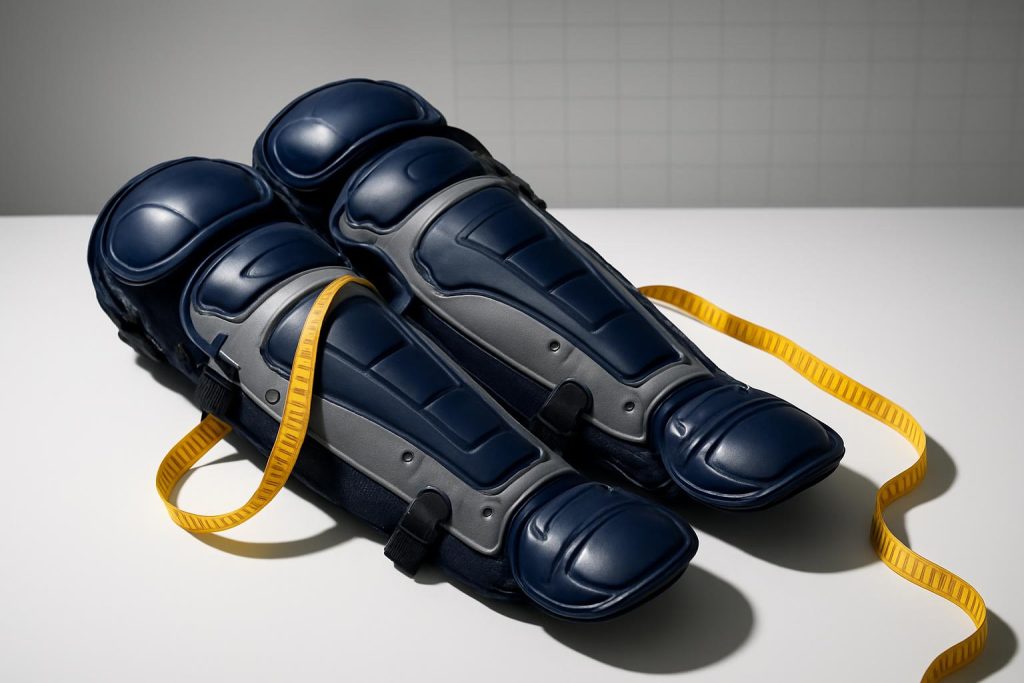
Sit with your knee bent at about a 90-degree angle. Find the top of your kneecap with your fingers and place the start of the tape just below the kneecap, where the kneecap meets your upper shin. Measure down the front of your shin to the point where your shin meets the top of your plate shoe or just above your ankle bone. This measurement in inches is your target shin guard size. Most manufacturers size in inches, and a typical adult range is about 15 to 18 inches. Measure both legs and use the larger measurement if they differ slightly.
How to Use Brand Size Charts
Each brand uses its own pattern for caps, wings, and instep protection. That means a 17-inch in one brand might feel longer or shorter than a 17-inch in another. Once you have your measurement, check the manufacturer’s size chart for the specific model you are considering. When in doubt, look at the span from the bottom of the knee cap to the ankle, not just total shell length, and read user feedback for fit notes like “runs long” or “short in the instep.” If you are between sizes, consider your stance depth: deeper crouches tend to prefer a slightly shorter profile; more upright stances may be fine with a longer shell.
Understanding Umpire Shin Guard Sizing: Inches vs. S/M/L
Most umpire shin guards list a numeric size in inches. You will also find size labels like Small, Medium, or Large. Treat the inch number as the main guide and the S/M/L code as a rough category. For adults, 15 to 16 inches typically fits shorter umpires or those who prefer a low-profile setup; 17 inches fits many average-height umpires; 18 inches suits taller umpires or those who want full coverage. Youth sizes usually fall in the 13 to 15 inch range. If you are around 5’6” to 5’9” with a neutral crouch, a 16 to 17 inch often fits. Above 6 feet, 17 to 18 inches is common. Remember, leg length can vary at any height, so always rely on your measurement first.
The Fit Checklist: What Proper Fit Looks and Feels Like
When you strap on your shin guards, they should feel secure without squeezing. The knee cap should center cleanly over the kneecap when you bend. The bottom edge should meet the top of your plate shoe without jamming into it. As you drop into your lowest crouch, the guard should not bite into your thigh or gap at the knee. Shift laterally into your working slot and check the inside and outside “wings” around your calf; they should stay wrapped without twisting. Walk, squat, and simulate a quick pivot to make sure the guard tracks with your leg rather than shifting or clunking.
Umpire vs. Catcher Shin Guards: Know the Difference
Catcher leg guards are built to protect while blocking balls and throwing from a kneel, with more rotation freedom in the ankle and often more bulk in the toe. Umpire shin guards are built to absorb direct impacts while you remain relatively stationary in the slot. They generally feature a more rigid knee cap, more side wrap around the shin, and a stable instep panel to pair with plate shoes. If you work the plate regularly, choose umpire-specific shin guards. Catcher models can feel light and flexible, but they often lack the focused frontal coverage and lateral protection umpires need.
Key Design Features That Affect Size and Comfort
Double vs. Triple-Knee Construction
Double-knee shin guards have two articulating caps at the knee; triple-knee designs add a third segment that extends coverage higher on the thigh. Triple-knee models tend to feel longer and may ride higher on the thigh, so if you are between sizes and considering triple-knee, you may be able to size down and still get full kneecap coverage. If you crouch deep or take a traditional slot with a lot of bend, triple-knee coverage is a strong option.
Wraparound Wings and Side Protection
Look for contoured wings on the inside and outside of the shin that cradle your calf. These wings reduce twisting and stop stingers from deflected foul tips that glance off the edge of the guard. The more the wings wrap, the more secure the guard feels, which can affect how long the model wears on your leg. A snug wrap can make a guard feel slightly shorter during movement, so again, measuring is important.
Instep and Toe Coverage
Umpire shin guards often include an extended instep plate that sits over the laces of your plate shoes. When you try them on, check that this plate covers the top of your foot without digging into the shoe’s tongue. If the instep plate comes up short, you may feel exposed. If it is too long, it can bind when you push forward into your stance. The right size lines up naturally with your plate shoe profile.
Shell Material and Padding
Most shells use high-impact plastics such as HDPE or ABS. Premium models may add advanced energy-dampening materials behind the shell. Padding can be removable or fixed; removable liners make cleaning easy, while fixed pads often keep a sleeker silhouette. For hot climates, look for vent channels and moisture-wicking liners. For cold evenings, denser foam can reduce the feel of impacts.
Strap System and Adjustability
Three or four adjustable straps are typical. Wider straps reduce pressure points and keep the guard from sliding. Some models use quick-release buckles; others use traditional elastic with metal or plastic loops. A good strap system allows micro-adjustments so you can fine-tune the fit over your base layer or plate pants without changing size.
Quick Size Reference by Use Case
If you work primarily the plate with a deep crouch, lean toward a guard size that places the kneecap segment precisely over your knee in your lowest stance, even if that means one inch shorter than your raw measurement. If you rotate between base and plate and often stand more upright on the plate, a true-to-measurement size is usually best. Youth umpires should prioritize a snug fit with the kneecap centered; it is safer to be a touch shorter with solid coverage than overly long and clumsy.
Common Sizing Mistakes to Avoid
Do not measure from mid-thigh or over the kneecap; that inflates your number and pushes you into a size that rides too high. Do not buy strictly by your height; two umpires of the same height can have very different lower leg lengths. Avoid assuming triple-knee automatically means you should size up; many triple-knee models add coverage without needing a larger size. Finally, avoid wearing catcher guards for plate work unless they are specifically designed for umpiring; the fit and protection priorities differ.
Break-In Tips That Improve Fit
New shin guards can feel stiff. Wear them around the house for short sessions, then practice a few crouch-and-stand repetitions. Adjust straps gradually rather than cranking them tight on day one. If the liner is removable, wash and reattach it tightly so it shapes faster to your leg. After two or three games, you will notice smoother articulation and fewer hot spots. Do not use heat to force a mold; let your body heat and movement do the work.
Care and Maintenance for Long-Term Comfort
After games, wipe down shells and air-dry liners. Do not leave guards baking in a hot car, as extreme heat can warp plastic and degrade foam. Check straps and buckles every few weeks. Replace worn elastics before they lose tension entirely; sloppy straps are a common cause of shifting guards and knee gaps. A clean, well-maintained guard often “wears shorter” in a good way because it stays anchored in the right place.
Women’s and Smaller-Frame Fit Notes
For smaller frames, a 15 to 16 inch model with a true wraparound calf wing may feel more stable than a longer, straighter 17 inch guard. If your kneecap is small or sits slightly lower relative to your shin, double-check that the knee cap centers during a deep crouch. Some brands offer narrower calf contours that reduce twisting. If you notice persistent gapping on the inside of your shin, try a model with more aggressive inner wing curvature.
2026 Buying Priorities: What to Look for This Season
Focus on a guard that balances protection and movement. Today’s better models combine rigid shells with smart padding that disperses energy without stacking too much bulk at the knee. Prioritize removable liners for easy cleaning if you work long tournaments. If you travel, look for a compact profile and strap hardware that packs flat. Finally, consider models with proven durability at stress points like knee rivets and strap anchors; a guard that holds its shape retains its size fit over time.
How to Shop Effectively on Amazon
Start with your measured size and filter by that inch number. Read product descriptions for specifics on double or triple-knee, instep length, and liners. Check the product Q&A where umpires often share their height, shin measurement, and chosen size. Look for photos that show the inside padding and strap layout. Compare two or three models in your size before deciding. If you are unsure, choose a seller with clear return policies so you can try on at home and confirm the knee cap alignment in your stance.
Recommended Umpire Shin Guards Available on Amazon
Force3 Pro Gear Ultimate Umpire Shin Guards
Known for premium impact absorption and robust knee construction, the Force3 Ultimate is a favorite for umpires who want maximum protection. It typically comes in sizes around 16.5 inches and 18.5 inches. Features often include advanced energy-dampening materials behind the shell and a triple-knee design that keeps the knee covered even in a deep crouch. If you work the plate at varsity, college, or advanced travel levels, this model is a standout for heavy foul-tip environments. Make sure to match your measured shin length; the triple-knee coverage can allow you to stay true-to-size even if you crouch low.
Champro Pro-Plus Umpire Leg Guards

Champro’s Pro-Plus series is a reliable workhorse with strong protection at a reasonable weight. Sizing commonly includes options in the 16.5 to 17.5 inch range. The triple-knee design keeps the knee protected, while an extended instep plate pairs well with standard plate shoes. Many umpires like the balance of padding density and shell rigidity; it is protective without feeling bulky. If you rotate plate and base, this model is a good all-around pick with straightforward sizing.
All-Star Umpire Leg Guards (LGU Series)
All-Star’s LGU models focus on clean articulation and a streamlined profile. Typical sizes run around 16 to 17 inches, with double or triple-knee variants depending on the exact listing. The wraparound wings are well-shaped and reduce twisting on quick pivots. If you prefer a mobile feel with dependable frontal protection, this is a solid choice. Double-check the kneecap length if you prefer a deeper stance; choose the configuration that keeps the knee centered when you drop low.
Wilson Pro Umpire Shin Guards / West Vest Series
Wilson’s umpire shin guards, often connected with the well-known West Vest lineage, are built for serious plate work. Expect multi-segment knee caps, a rugged shell, and dense padding that tamps down foul-tip shock. Sizing commonly ranges from about 16 to 18 inches. The knee structure is confidence-inspiring for umpires who take the traditional slot. If you are between sizes, consider your stance depth; Wilson’s caps cover well and may allow you to stay with your true measurement.
Champion Sports Umpire Leg Guards
Champion’s umpire guards are a budget-friendly option that still checks the main boxes: rigid shell, knee protection, and instep coverage. Sizes you may see include around 16 inches for adults and smaller sizes for youth. The design tends to be simpler and lighter, which makes it attractive for new umpires or those who want a low-profile guard for warm-weather games. If you umpire occasionally or at lower levels, this is a practical starter choice without overcomplicating fit.
Diamond Sports Umpire Leg Guards
Diamond’s umpire models aim for durability with straightforward adjustability. Typical sizes include about 15 to 17 inches, depending on the listing. The shape is comfortable for many calf contours and the knee segments track smoothly. If you want something you can set-and-forget throughout a weekend, Diamond’s lineup is worth a look. Verify whether the model you pick is double or triple-knee to match your crouch depth.
MacGregor Umpire Leg Guards

MacGregor offers accessible options that cover the essentials. Common adult sizes are around 17 inches, with youth versions offered by some sellers. These guards are often appreciated for simple setup and solid frontal coverage. If you are building a starter kit or need a backup pair for tournaments, MacGregor is a dependable budget-friendly brand to consider.
Adams Umpire Shin Guards
Adams has been a staple name in protective gear, offering functional, no-frills umpire shin guards in adult and youth sizes. Expect sizes near 15 to 17 inches with traditional strap systems. The feel is typically lighter and straightforward. For umpires who value simplicity and a classic fit, Adams can be a sensible pick at an accessible price point.
Sizing Scenarios: What Real-World Fit Looks Like
Youth Umpire Working First Season
A 14-year-old umpiring kids’ games measures 14.5 inches from just below the kneecap to the top of the plate shoe. A 15-inch youth model will usually be the best match. The kneecap should sit square with a slight overlap above the knee when standing. Avoid sizing up to 16 or 17 inches “to grow into,” which often leads to restricted movement and sliding during sprints.
Adult Novice at 5’8” with Neutral Crouch
A new adult umpire measures 16.25 inches on the shin and uses a neutral crouch. A 16 or 16.5 inch guard will align the instep plate perfectly and keep the knee cap centered. If they choose a triple-knee, 16.5 may give just a touch more thigh coverage without climbing too high.
Tall Veteran at 6’2” with Deep Slot
An experienced umpire at 6’2” who takes a deep slot measures 17.25 inches. A 17 inch triple-knee often gives adequate coverage with better mobility, as 18 inches may ride high in a deep crouch. The key is testing that the knee cap centers even at full depth, which a triple-knee usually maintains.
Plate vs. Base: Does Your Primary Position Change Your Size?
If you are primarily a base umpire, a lower-profile, shorter guard can make sense because you will sprint more, turn more, and face fewer direct impacts. However, if you take the plate even a third of the time, size and choose features with plate work in mind. It is better to protect for the highest-impact position rather than sizing for base-only comfort and being under-protected behind the dish.
How to Check Fit at Home After Your Amazon Order Arrives
Try on with the plate shoes you will wear in games. Strap in with even pressure, then crouch, stand, and pivot. Do a slow-motion mimic of tracking a pitch inside and outside to see if the guard twists. Tap the shell gently at the kneecap and along the shin to check for obvious gaps where you feel direct pressure. If the kneecap floats or the instep plate rides onto the shoe too far, you may need a different size or a different model’s shape. Do not remove tags until you are confident in the fit if you plan to return or exchange.
Budget Planning Without Compromising Safety
You can get safe, reliable coverage at many price points. Budget models focus on rigid shells and basic liners. Mid-tier models add better articulation and ventilation. Premium models invest in advanced padding and complex knee assemblies that disperse shock efficiently. Decide whether your priority is maximum foul-tip protection for heavy plate assignments or lighter weight for mixed plate and base work. Buy the best you can within your budget, but always choose correct size over extra features.
When to Replace or Resize Your Shin Guards
If your straps have stretched so much that you overtighten and still slide, it is time for new straps or a new pair. If the knee cap no longer centers in your stance or the shell has warped, replace the guards. Frequent tournament umpires often refresh their shin guards every few seasons, while occasional umpires can go longer. Remember that an old guard that has lost its shape effectively “changes size,” which can leave gaps at the knee or instep.
Troubleshooting Fit Problems
Guard Rides Up into the Knee
This often means the guard is too long or the straps are tightened unevenly, pulling the guard up your shin as you bend. Try loosening the top strap slightly and tightening the mid-strap for better anchor. If that fails, consider one size shorter or a model with a shorter knee segment.
Instep Plate Digging into Shoe
Either the guard is slightly too long, the instep plate is extended for a thicker plate shoe, or the angle of your stance is forcing the plate into the shoe. First, adjust the lower strap tension. If the plate still rides hard, a shorter size or a model with a different instep shape will solve it.
Knee Cap Off-Center When You Squat
Make sure you measured from just below the kneecap. If you did, try minor strap changes to adjust how the guard sits. If it remains off-center, the model’s knee geometry may not match your leg shape; switch to a guard with a different knee cap shape or triple-knee articulation.
Care Tips for 2026: Keep Them Fresh, Dry, and Stable
Wipe the shell, lift out removable liners, and air-dry between games. A small gear bag with vented panels prevents stale moisture from weakening foam. Periodically check rivets around the knee; if they loosen, contact the manufacturer or replace before your next assignment. Label left and right guards clearly so you do not swap them in a rush; consistent orientation preserves the fit.
Frequently Asked Questions
Do I size up if I wear thicker pants?
Usually no. Adjust your straps to accommodate thicker fabric. Size up only if your kneecap rides exposed when you crouch with your full game uniform.
Are triple-knee shin guards always better?
Not always. They offer great coverage for deep crouches and hard foul environments, but they can feel longer and heavier. If you prefer quick movement and have a shallow crouch, a double-knee may fit your style better.
Can I use catcher shin guards for umpiring?
It is not recommended for plate work. Umpire guards prioritize frontal impacts and lateral foul tips with a different wrap and knee cap structure. Catcher guards are optimized for blocking and throwing mechanics.
What if my measured size is 16.5 inches and the brand only offers 16 or 17?
Match the size to your stance. If you crouch deep, 16 may keep the knee cap centered without riding high. If you are more upright, 17 may provide better instep coverage. Read the brand’s size notes to see whether the model runs long or short.
How tight should the straps be?
Tight enough to eliminate shifting, but not so tight that they pinch. Your leg should flex without feeling pressure points where the strap crosses the calf. Even tension across all straps creates the most stable fit.
A Simple Plan to Get Your Perfect Fit
Measure Accurately
Measure from just below your kneecap to the top of your plate shoe. Record the number in inches and repeat on both legs.
Match to Models
Find a guard with a corresponding inch size. Consider double vs triple-knee based on your crouch depth and foul ball environment. Choose a wrap shape that suits your calf.
Try and Test
Put on your plate shoes, strap in, crouch, pivot, and simulate a game. Check knee alignment and instep coverage. Make minor strap adjustments to dial it in.
Commit or Exchange
If the knee cap and instep line up, you are set. If not, exchange promptly for one size up or down, or for a different model shape. Getting the right size now saves you from game-day discomfort and risk.
Conclusion: Your Best Game Starts with the Right Size
Great umpiring relies on calm mechanics and steady focus. Poorly sized shin guards distract you at the worst moments. Measure carefully, choose a design that matches your crouch and level, and confirm the fit at home before your first pitch. On Amazon, strong options like Force3 Pro Gear Ultimate, Champro Pro-Plus, All-Star LGU, Wilson Pro/West Vest, Champion Sports, Diamond Sports, MacGregor, and Adams offer reliable sizing and proven protection. When the kneecap is centered, the instep is covered, and the guard stays put through every pitch, you forget about your gear completely—and that is exactly the point. Step behind the plate protected, comfortable, and ready to own the zone in 2026.