
We are reader supported. When you purchase through links on our site, we may earn an affiliate commission. Also, as an Amazon affiliate, we earn from qualifying purchases.
If you have heard fans yell turn two and wondered what that means, you are in the right place. A double play is one of baseballs most satisfying defensive moments. It flips an inning in seconds, saves pitchers, and stuns runners who thought they were safe. This guide breaks down what a double play is, how it works, when to expect it, and what skills make it happen. Keep reading, and by the end you will be able to spot every version of it and understand why coaches drill it over and over.
Introduction
A double play turns two outs on a single continuous play. It is fast, precise, and built on simple rules that any beginner can learn. Start with the core idea: if the defense can legally retire two runners before the play ends, it is a double play. From there, everything else is timing, communication, and footwork.
What a Double Play Really Is
A double play is a defensive play that records two outs in one live-ball sequence. There is no stoppage between the two outs. The ball stays live, fielders move quickly, and outs happen back to back.
Most double plays happen on ground balls with a runner on first base and fewer than two outs. Fielders get the force at second, then throw to first for the second out. But not all double plays look the same. Some start with a line drive. Some start with a strikeout. Some are unassisted by a single fielder. Once you know the building blocks, you will see them everywhere.
The Building Blocks of Turning Two
Outs, Force Outs, and Tag Outs
There are two ways the defense gets outs during a double play.
Force out: A runner is required to advance because the batter became a runner. Step on the forced base with the ball in control before the runner arrives. No tag needed.
Tag out: Touch the runner with the ball or glove holding the ball while the runner is off a base. No force is required for a tag out. This shows up on rundowns or when a runner takes a turn and slips off the bag.
When a Double Play Is Possible
The classic setup is a ground ball with a runner on first and less than two outs. The batter is forced to first, and the runner on first is forced to second. That creates two potential outs on one ball. Double plays also happen on caught line drives when a runner strays too far from a base, on fly balls with smart throws, and on strikeouts with a runner trying to steal.
Where It Usually Starts
Most double plays begin with the shortstop or second baseman fielding a ground ball. Sometimes the third baseman starts it. Sometimes the pitcher or first baseman fields and then goes to second. The catcher can start one on bunts or swinging bunts. Outfielders start double plays by catching a fly ball and throwing behind a runner who left early or wandered too far.
The Classic Infield Double Plays
6-4-3 Double Play
This is the most common. The shortstop fields the grounder (6), tosses to the second baseman at second base (4) for the first out, who then throws to the first baseman (3) for the second out. Quick transfer, firm throw, and a clean catch and stretch at first finish the job.
4-6-3 Double Play
Reverse the roles. The second baseman fields the ball (4), flips to the shortstop covering second (6) for the first out, and the shortstop fires to the first baseman (3). Same timing, different angles and footwork.
5-4-3 Double Play
Third baseman to second baseman to first baseman. The third baseman must field and get rid of the ball fast, often with a strong cross-body throw. The second baseman pivots and launches a quick throw to first.
3-6-1 and 1-6-3 Double Plays
First baseman starts it on a hard-hit ball. On 3-6-1, the first baseman fields and throws to the shortstop at second for the first out, and the pitcher covers first to receive the relay for the second out. On 1-6-3, the pitcher fields, throws to the shortstop at second, then the throw goes to first. These demand clean communication because the pitcher must hustle to the bag.
Other Types You Will See
Line-Drive Double Offs
A fielder catches a line drive for the first out, then steps on a base or throws to a base before a runner returns. Example: runner on first breaks on contact, the shortstop snags the liner, steps on second, and the runner is doubled off. One fielder can do both outs unassisted if the base is close.
Fly-Ball Throwouts
An outfielder catches a routine fly ball. A runner tries to advance. The outfielder throws behind the runner who left early or tries for an extra base. Catch, tag, and you have two outs. This is common when runners misread ball depth or forget game situation.
Strike-em-out Throw-em-out
The pitcher gets a strikeout as the runner tries to steal. The catcher throws to second or third to catch the runner. First out is the strikeout. Second out is the caught stealing. Clean exchange and an on-target throw from the catcher are key.
Appeal Plays That Create Double Plays
On a fly ball, the batter is out on the catch. If a runner left a base too soon and the defense appeals by tagging that base with the ball before the runner legally returns, that runner is out. Catch for the first out plus a proper appeal for the second out equals a double play.
Rules and Safety That Shape Double Plays
Force-Play Slide Rule at Second Base
At second base, the runner must slide legally on force plays. The slide must be on the ground within reach of the base, not targeting the fielder, and not changing path to initiate contact. This rule protects middle infielders who are vulnerable while making the pivot. If the runner violates the rule, the umpire can call both the runner and batter-runner out.
Interference and Obstruction
Offensive interference occurs when a runner intentionally hinders a fielder making a play. The ball is dead and at least one out is called. It can wipe out extra advances and can also result in multiple outs if it prevented a double play. Obstruction happens when a fielder without the ball blocks a runner. In obstruction, the umpire awards bases. These calls affect whether a double play stands or is negated.
Infield Fly Rule and Why It Matters
With runners on first and second or bases loaded and fewer than two outs, a fair fly ball that can be caught with ordinary effort triggers the infield fly rule. The batter is out immediately. This prevents the defense from letting the ball drop on purpose to start an easy force double play. It keeps the game fair and stops cheap outs.
Footwork and Fundamentals
Roles of the Shortstop and Second Baseman
These two are the double play core. One fields, one covers second, and then they reverse the next time. They communicate before the pitch on who will cover the bag based on hitter tendencies and where the ball is likely to go.
Feeds That Make the Pivot Possible
Underhand flip: Used on balls close to the bag. Quick, accurate, and easy to handle.
Overhand toss: Used when fielders are farther from the base or off balance. Throw chest high to help the pivot.
Glove flip: A fast, short-range option when there is no time to transfer to the throwing hand. It must be crisp and on target.
The Pivot at Second
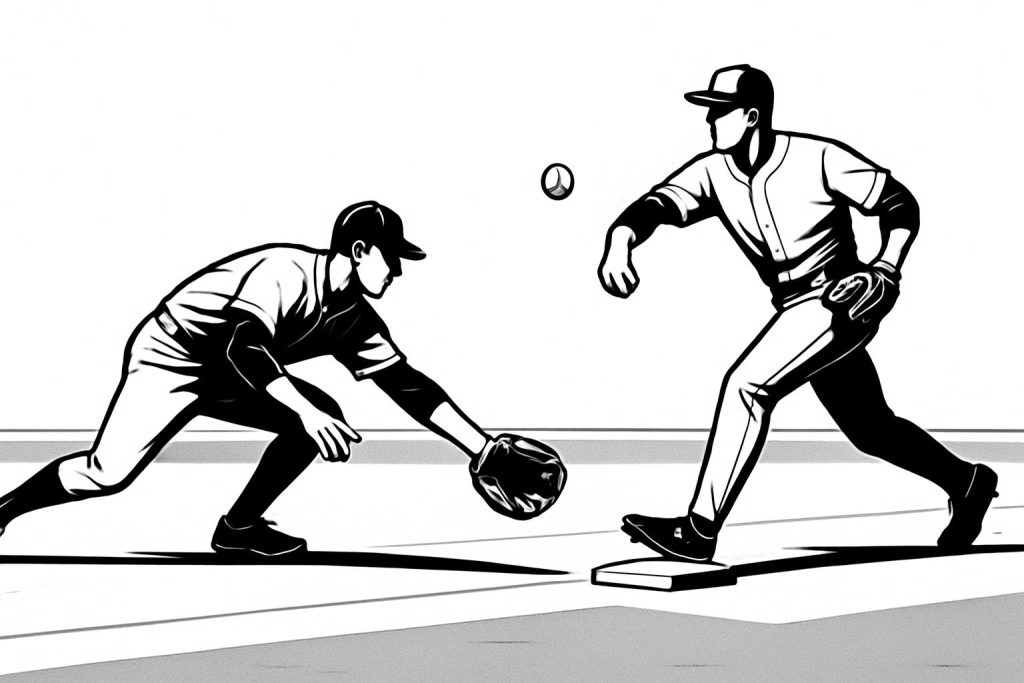
The pivot is a catch and throw on the run to avoid contact with the runner. The fielder approaches the bag with a plan, catches the feed, steps the foot onto the base for the force, clears the base path, and throws to first. The throw angle depends on the side of the bag where the feed arrives. The goal is to be fast but balanced so the throw is accurate.
First Baseman Techniques
The first baseman sets up with a stretch toward the throw, keeps the foot on the bag, and presents a clear target. Soft hands and footwork adjust to off-line throws. If the throw pulls the foot early, the runner is safe. Stretch after the ball reaches the glove, not before.
Pitcher and Catcher Roles
The pitcher fields bunts and comebackers and must instantly decide where to go. If the lead runner is a real chance, go there. Otherwise, take the sure out at first. On certain double play starts like 3-6-1, the pitcher must sprint to first for the return throw. The catcher controls traffic on bunts, fields in front of the plate, and fires to second or third if the lead is available.
Timing and Strategy
Know the Runners and the Batter
Speed matters. A slow batter gives middle infielders more time to turn two. A fast runner at first shrinks the window for the pivot. Coaches track these tendencies and adjust priorities. On a weak hitter, play for two. On a burner, secure one out and prevent extra bases.
Defensive Positioning and Double-Play Depth
Double-play depth means the middle infielders play a few steps closer to second and a bit shallower. This shortens the feed and helps the pivot. The tradeoff is less range for balls up the middle or deep grounders. Corner infielders may play in or back depending on bunt threats and game situation.
When to Take the Sure Out
Do not force a double play if the clock is gone. If the lead runner is already at second by the time the fielder secures the ball, go to first. One out is always better than none. Smart teams read the speed off the bat and make the safe choice.
Scoring a Double Play on the Card
Position Numbers You Need
Scorekeeping uses numbers for defensive positions: 1 pitcher, 2 catcher, 3 first baseman, 4 second baseman, 5 third baseman, 6 shortstop, 7 left fielder, 8 center fielder, 9 right fielder.
How to Read 6-4-3 and More
The numbers show the path of the ball and the outs. A 6-4-3 double play means shortstop to second baseman to first baseman. A 4-6-3 is second baseman to shortstop to first. A 5-4-3 starts at third. If a single fielder makes both outs, it is unassisted, shown as U. For example, a lineout by the first baseman who then steps on first to double the runner is 3U.
Who Gets Credit
Fielders who handle the ball get putout and assist credit. Pitchers benefit too. When a batter hits a ground ball into a double play, it is tracked as a GDP for that batter. The pitcher gets a huge boost by erasing a runner and cutting pitch count.
Common Mistakes That Break a Double Play
Bad Feed to the Bag
Wide, slow, or low throws ruin timing. The pivot fielder must adjust, and a clean out at first may not be possible. Practice builds muscle memory for fast, chest-high feeds.
Dropped Transfer
On the pivot, the ball must be secured before the release. Dropped transfers cost the first out or force the fielder to settle for only one out. Secure first, then throw.
Foot Off the Bag Too Soon
At second and first, the fielder must maintain contact with the base or catch the ball before leaving it. Pulling early leads to safe calls. Umpires focus on this in tight plays.
Runner Interference
Runners cannot change lanes to hit fielders or throw their arms to disrupt throws. If they do, the umpire can call the runner out and may also call out the batter-runner if the interference was intended to break up a double play. Avoid this by sliding straight and staying within reach of the base.
Practice Tips for Beginners
Two-Step Feed and Pivot Drill
Set a cone five feet from second base. The feeder fields soft tosses, takes two steps, and flips to the pivot fielder who touches the bag and throws to a target. Emphasize clean flips and quick feet.
Transfer and Throw Drill
Use tennis balls first. Catch, transfer to throwing hand, and get the ball out in one smooth motion. Add pace as consistency grows. Accuracy first, then speed.
First Base Stretch and Reach
Place a target at the front of the bag. Practice catching balls that are high, low, and slightly off line while keeping one foot on the base. Work on late stretch so the glove stays soft.
Communication Reps
Before each rep, call who covers the bag. After the rep, confirm whether the call worked. Good habits in practice lead to fewer mix-ups in games.
Game Situations You Should Read
Early Inning With a Runner on First
Play for two unless the batter is very fast. Middle infield at double-play depth. Corners ready for a bunt but prepared to field and go to second.
Late Inning With a One-Run Lead
Outs matter most. Take the sure out at first if the feed to second looks risky. Avoid throwing the ball away. Make the offense earn extra bases.
Bases Loaded, Less Than Two Outs
The infield looks for home-to-first double plays on sharp grounders. Corners may be in, middle at normal or double-play depth depending on ball-in-play tendencies. Speed forces quick choices. Coaches often set priorities pitch to pitch.
How Double Plays Change an Inning
A single double play clears traffic and deflates a rally. Pitchers regain control, and defenses reset. The offense loses a runner and an out instantly. In youth and beginner games, one clean double play can swing confidence and momentum. That is why coaches value steady infield play and routine throws.
How To Spot a Double Play as a Fan
Look for the setup. Runner on first with fewer than two outs. The batter hits a sharp grounder to the left side. The fielder fields cleanly and looks to second. Watch the feet around the bag and the timing to first. On line drives, scan the nearest base. If a runner is far off the bag and the ball is caught, a quick step on the base can end two hopes at once.
Advanced Notes for Curious Beginners
Unassisted Double Plays
Sometimes one player does it all. A first baseman catches a liner, steps on first to beat the runner back. A middle infielder catches a line drive and beats a runner to second. The scorebook marks these with U after the fielder number.
Why Some Grounders Do Not Turn Two
Ball speed, hop quality, and angle matter. A slow roller forces the fielder to charge, reducing time for the pivot. A hot shot right at a fielder can be perfect for two. Add in runner speed, and the window shrinks or grows by fractions of a second.
When the Lead Out Is Better Than Two
On a hard-hit ball with a runner on third, some infields go home first to stop a run, then try for first if time allows. If the throw home is late, taking one out at first is safer. Game context decides.
Conclusion
A double play is simple in concept and rich in detail. Two outs on one live ball. Build from the basics of force and tag, learn the common 6-4-3 and 4-6-3 turns, and pay attention to the footwork at second and the stretch at first. Know how rules like the force-play slide rule and the infield fly rule shape what you see. With that framework, every grounder, liner, or steal attempt becomes a chance to read the field. Keep watching, keep practicing, and the rhythm of turning two will start to make complete sense.
FAQ
What is a double play in baseball
A double play records two outs during one continuous live-ball play, most often on a grounder with a runner on first and fewer than two outs.
What do numbers like 6-4-3 mean on a double play
They show the path of the ball by defensive position numbers, such as shortstop to second baseman to first baseman for 6-4-3.
When is a double play most likely to happen
The classic setup is a ground ball to the infield with a runner on first and less than two outs, allowing a force at second and then a throw to first.
What is the force-play slide rule at second base
It requires the runner to make a legal slide within reach of the base and not target the fielder; violations can result in outs on both the runner and the batter-runner.
What is a strike-em-out throw-em-out double play
The pitcher strikes out the batter as a runner tries to steal, and the catcher throws out that runner for the second out.