
We are reader supported. When you purchase through links on our site, we may earn an affiliate commission. Also, as an Amazon affiliate, we earn from qualifying purchases.
You want to throw more, stay safer, and keep practice efficient. In 2026 that starts with choosing the right protection in front of the pitcher. The debate is simple on the surface yet full of detail once you look closer: a pitching net you throw into or an L-screen that shields you from batted balls. Both look similar at a glance. They do very different jobs for safety.
This guide breaks down what each does, why injuries still happen around nets and screens, which options hold up for real-world use, and how to set up your space to reduce risk. You will find clear product picks, practical safety notes, and step-by-step advice you can put to work today.
Pitching Net vs. L-Screen: What They Actually Do
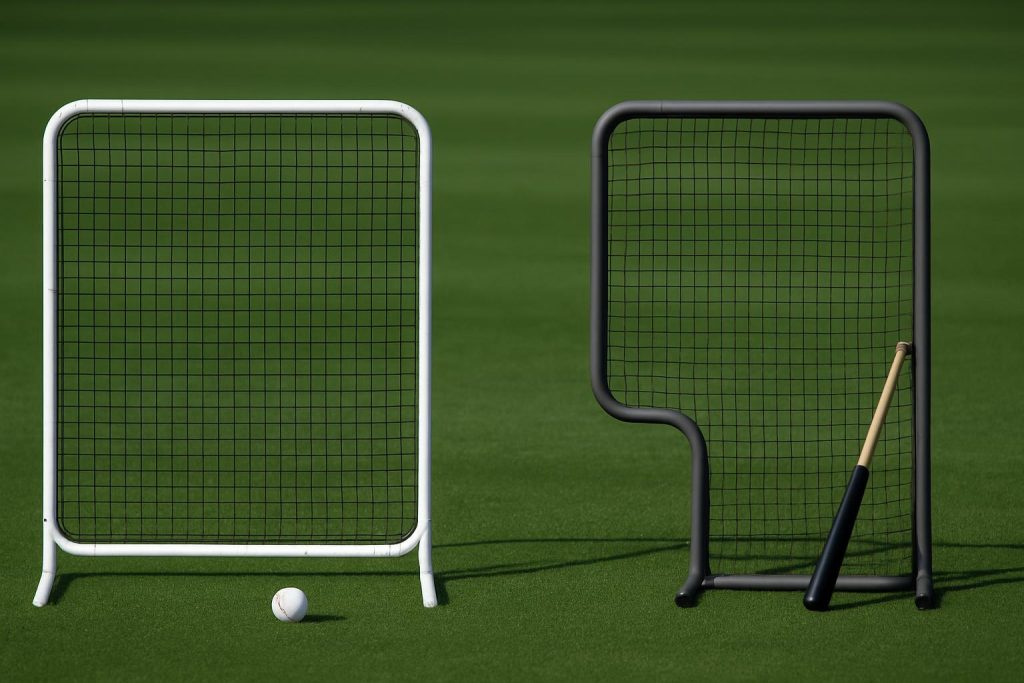
Call the first a pitching net or sock net. It is a target to throw into. It absorbs thrown balls. It is not made to protect a live pitcher from a hitter.
An L-screen is a protective barrier with an L-shaped cutout for the throwing arm. It is designed to shield a coach or pitcher during front toss, live BP, machine work, and comebackers.
This distinction drives all safety decisions. Use a pitching net for solo work. Use an L-screen for any drill where a hitter could put a ball back at the mound.
The Safety Question in 2026: Key Risks and What Actually Matters
Coverage Area
Look at how much of the pitcher’s body is blocked. A 7×7 net that you throw into covers a square in front of you but does not create a safe throwing lane. An L-screen with a proper cutout blocks the torso and head while allowing a natural arm slot. High school and up should favor full 7×7 L-screens with a wide base. Youth can sometimes use smaller screens if velocities are low, but full coverage still reduces risk.
Rebound Behavior
Safety hinges on energy absorption. Bow-style frames and slack net pockets reduce rebound. Tight nets on rigid frames tend to kick balls back. Sock nets are good at deadening thrown balls. L-screens with double-layer pillowcase nets control ricochet on batted balls and last longer under high exit velocity.
Stability and Anchoring
Tip-overs cause facial and finger injuries. A wide base lowers the center of gravity. Steel frames with wheel kits stay put but need care on concrete. Portable fiberglass frames are lighter and need sandbags or stakes outdoors in wind. Indoors, add weights at the rear feet so the screen does not drift.
Set-up and Breakdown Risk
Pinch points are a real issue. Spring steel and click pins can catch fingers. Portable frames should use color-coded poles, push-button pins with guards, and soft edges on feet. If a product takes more than 5 minutes for an experienced coach to set up, the team will start cutting corners and safety slips.
Use Case Mismatch
Most accidents happen when a pitching net is used to protect a person. That is the wrong tool. The second pattern is using a youth-grade portable L-screen for varsity exit velocities. That screen deforms, shifts, or fails. Match the tool to the speed.
Indoor vs. Outdoor
Outdoors, wind moves light frames. Indoors, concrete amplifies rebound and sliding. Anchor accordingly. Outdoors also adds UV exposure that weakens net fibers. Knotless, UV-stabilized netting lasts longer.
Quick Answer: Which Is Safer in 2026
For any drill with a hitter involved, an L-screen with the right size and stability is safer. For solo throwing, a pitching net is safer and more efficient. Do not rely on a pitching net as a protective barrier for live BP or front toss.
Best Pitching Nets in 2026 for Safer Solo Work
BowNet Big Mouth Original 7×7 Net

The classic sock-style target known for its Energy Absorption System. The bow frame flexes to deaden the ball and guides throws into a central pocket. Stability is good for a portable, and the net design limits wild ricochets. Setup time is short once you learn the sequence.
Why it helps: The deep sock reduces bounce-back and returns balls to the pocket, which keeps the area around your feet clear. That lowers trip risk and allows higher-rep throwing without constantly fetching balls.
Best for: Backyard bullpens, team warm-ups, soft-toss and tee drills where no live pitcher is exposed behind the net.
Potential downsides: Not a protective screen for hitters. In heavy wind, stake or sandbag the rear base to avoid tipping. The bow poles should not be over-bent during assembly.
Safety notes: Angle the face slightly forward to kill rebound. Place a 6 to 8 foot safety buffer behind the net so missed throws do not hit bystanders.
Rukket Haack Pro 7×7 Practice Net
Built with input from college coaching, this net emphasizes durability with thick netting and a firm, stable base. The central sock target helps with command work and high-volume sessions.
Why it helps: Strong netting and a defined pocket control rebounds even on harder throws. Stability is better than budget nets, which cuts down on chase time and collisions.
Best for: Pitchers who want reliable daily use. Coaches who need a toss-and-go station that will not sag mid-practice.
Potential downsides: Heavier than basic bow-frame nets. Still not a shield for live BP. Store indoors to extend net life under sun and rain.
Safety notes: Use two rear sandbags outdoors. Inspect the bottom seam weekly for wear so a sudden tear does not dump balls under your feet.
PowerNet 7×7 DLX Practice Net
A value-forward 7×7 that still packs a deep pocket and flexible frame. Popular with travel teams for its carry bag and simple setup.
Why it helps: Good energy absorption for the price. The pocket keeps balls organized so players do not crowd the throwing lane.
Best for: Teams that need multiple stations on a budget. Backyard throwers who will set up and break down often.
Potential downsides: Connector joints may loosen over time with rough handling. Expect to replace netting sooner under heavy, daily use.
Safety notes: Add Velcro straps at the bottom corners to reduce net creep. Rotate the frame every few sessions to even wear on the feet.
GoSports 7×7 Pro Baseball and Softball Net
Sturdy metal base and bow-style top poles. This model balances cost, stability, and quick assembly with a durable net pocket.
Why it helps: The metal ground frame resists twist and helps the net face the thrower square, which reduces glancing rebounds and errant kicks.
Best for: Indoors where a flatter base prevents sliding. Multi-sport training where repeated set-up needs to be quick and predictable.
Potential downsides: Heavier carry than ultra-light nets. Net stitching should be checked after wet conditions to prevent seam stress.
Safety notes: On concrete, place thin rubber mats under the feet to avoid frame creep and loud ricochet sounds that distract players.
Best L-Screens in 2026 for Live BP, Front Toss, and Machine Work
Bownet Portable Elite L-Screen
A portable L-screen with a stiffer feel than typical fiberglass pop-ups. It uses Bownet’s energy absorption design to handle repeated contact while staying lighter than full steel. The cutout gives a natural throwing lane and the footprint is wide for stability.
Why it helps: Better impact damping than many portable L-screens. The wider base reduces tipping during mis-hits and keeps the thrower protected through the follow-through.
Best for: Travel programs and indoor facilities that need fast setup and solid protection at moderate to high velocities.
Potential downsides: Costs more than basic portable models. Still not as rigid as pro-grade steel for elite exit velocities.
Safety notes: Face the long foot toward the hitter. Add two sandbags on the rear leg in windy outdoor sessions. Ensure the cutout height matches your thrower’s arm slot.
CHAMPRO Pro-Style 7×7 Steel L-Screen
Welded steel frame with a pillowcase-style double net. This is the classic heavy-duty cage screen that sits where you put it and shrugs off varsity impact. Wheel kit options make field moves easier.
Why it helps: Rigid steel absorbs and disperses energy without bouncing into the thrower. The double-layer net reduces ricochet and extends service life.
Best for: High school, college, and training facilities. Live BP with wood bats and higher exit velocities.
Potential downsides: Heavy and not travel-friendly. Requires more space and care when moving through doorways.
Safety notes: Keep hands clear of the wheel hubs during moves. Inspect welds and net lacing monthly. Do not leave uncovered in heavy rain; rust shortens lifespan.
JUGS Protector Series 7×7 L-Screen
A respected name in cage equipment, this 7×7 uses thick, powder-coated tubing and a double-thick net sleeve. It is built to live in a cage and take daily impact.
Why it helps: The tubing diameter and net thickness resist frame flex and net burn-through. The design keeps the thrower behind the protection line through the release and recovery.
Best for: Programs that run daily cages and multiple BP groups. Pitching machines where miss-hits can come back fast.
Potential downsides: Assembly is straightforward but requires time and tools. Storage space is needed when not in use.
Safety notes: Add a floor mark for the safe throwing spot relative to the cutout. Replace net sleeves at the first sign of fray near the cutout corner.
PowerNet 7×7 Portable L-Screen
A lighter L-screen for youth and travel ball. It assembles fast, packs small, and is easy to move between stations. Better suited to developmental speeds than top varsity exit velocities.
Why it helps: Good coverage for younger hitters with an arm slot window that keeps mechanics natural. The frame flex helps absorb energy without sharp ricochet.
Best for: Youth practice, front toss, and mixed drills where quick station changes matter.
Potential downsides: Not intended for elite-level impact. Requires sandbags outdoors.
Safety notes: Confirm the thrower stands fully behind the vertical segment of the L, not peeking around the edge. Adjust the distance to add reaction time if hitters jump in skill level mid-season.
How to Size and Place Your Net or Screen for Safety
For Pitching Nets
– Choose 7×7 for adults and teens. Smaller nets reduce margin for error and increase chase time.
– Set the face slightly forward. A small forward lean kills bounce-back.
– Place a 6 to 8 foot clear zone behind the net. Keep buckets and players out of the recoil path.
– Throw from regulation or planned drill distance. Do not move so close that your follow-through collides with the frame.
For L-Screens
– Use 7×7 with a properly sized cutout. The cutout should match the thrower’s arm slot so no part of the head or lead shoulder is exposed.
– Angle the screen slightly toward the pull side of the hitter. This captures more mis-hits and reduces wrap-around liners.
– Distance matters. Start at 25 to 30 feet for youth front toss and 35 to 45 feet for adult soft toss and BP when space allows. Increase distance with hitters who produce higher exit velocities to buy reaction time.
– On turf or concrete, add weights to each base point. On grass, use stakes when wind exceeds light breeze.
Safety Checklist You Can Post in the Dugout
– Confirm the right tool: pitching net for solo throws, L-screen for any ball off a bat.
– Check for frame deformity or cracked joints before starting.
– Ensure double-layer netting on L-screens that live in cages.
– Add sandbags or stakes before the first rep, not after the first tip-over.
– Mark a safe throwing spot relative to the cutout with tape or paint.
– Keep buckets, tees, and players out of the rebound zone.
– Rotate net faces weekly to even wear.
– Replace any frayed netting near frame edges at first notice.
Budget Tiers and What You Trade Off
Entry Level
Light bow-frame pitching nets and portable L-screens save money and weight. They are easy to set up and great for youth. The trade-off is lifespan and stability at higher impact speeds. Anchor often. Inspect more.
Mid Tier
Reinforced nets with thicker pockets and portable L-screens with stronger joints give better energy control and fewer surprises. They suit travel teams and active practice schedules with mixed ages.
Pro Grade
Steel L-screens with double pillowcase nets live in cages and handle top exit velocities. They cost more and weigh more. They are the safest choice when a hitter is involved and space allows.
Common Myths to Drop in 2026
– A pitching net can stand in for a screen when space is tight. It cannot. The wrong tool is the biggest risk.
– Bigger is always safer. Size helps, but anchoring and net quality matter more.
– Double net layers are overkill. They reduce ricochet and prevent sudden burn-through failures.
– Portable means flimsy. The best portable L-screens today absorb energy well, but you still need to match them to the level of play.
2026 Outlook: What Is Improving
– Smarter frames: More brands use flex zones and wider feet to lower tip risk without adding bulk.
– Better netting: UV-stabilized, knotless fibers extend life and cut down on sharp rebounds after months in the sun.
– Faster assembly: Color-coded poles and guarded push pins reduce setup mistakes and finger pinches.
– Anchoring systems: Included sandbag sleeves and stake kits make proper anchoring a habit, not an afterthought.
Scenario-Based Recommendations
Solo Pitching in a Backyard
Pick a 7×7 sock-style pitching net like BowNet Big Mouth or Rukket Haack Pro. Angle it forward, sandbag the rear, keep a clear landing area for your stride. No L-screen needed unless a hitter is part of the drill.
Youth Team Practice with Front Toss
Use a portable L-screen such as PowerNet 7×7 Portable L-Screen. Keep toss distance at 25 to 30 feet, add sandbags, and mark the throwing spot behind the vertical leg.
High School or College BP in a Cage
Use a steel L-screen such as CHAMPRO Pro-Style or JUGS Protector. Double net sleeves, wheel kit for movement, daily inspections. Do not sub in a pitching net.
Travel Team with Mixed Drills Outdoors
Bownet Portable Elite L-Screen plus a 7×7 pitching net station. Screens get weights or stakes. Pitching net handles warm-ups and bullpens. The L-screen protects any thrower facing a hitter.
How to Get More Life and Safety from Your Gear
Weekly
– Shake out dirt and turf beads from net corners.
– Check bottom seam stitching and replace zip ties or laces as needed.
– Wipe frame feet and inspect for sharp edges that could cut netting.
Monthly
– Rotate net orientation to spread wear.
– Tighten bolts on steel frames and examine welds for hairline cracks.
– Wash netting with mild soap and water if used outdoors frequently, then air dry fully.
Seasonally
– Replace any net panel with visible fray or UV fading.
– Lubricate wheel axles lightly on steel screens.
– Inventory sandbags and stakes. Replace broken or leaking bags before the next windy day.
Final Clarity: Which Is Safer
If a hitter is involved, an L-screen is safer. If you are throwing alone, a pitching net is safer and more efficient. That single rule prevents most injuries around training nets in 2026.
Choose the right model for your level. Anchor it correctly. Keep the throwing lane clear. Inspect your gear like you would your glove or bat. Do those simple things and your practices run longer, cleaner, and safer.