
We are reader supported. When you purchase through links on our site, we may earn an affiliate commission. Also, as an Amazon affiliate, we earn from qualifying purchases.
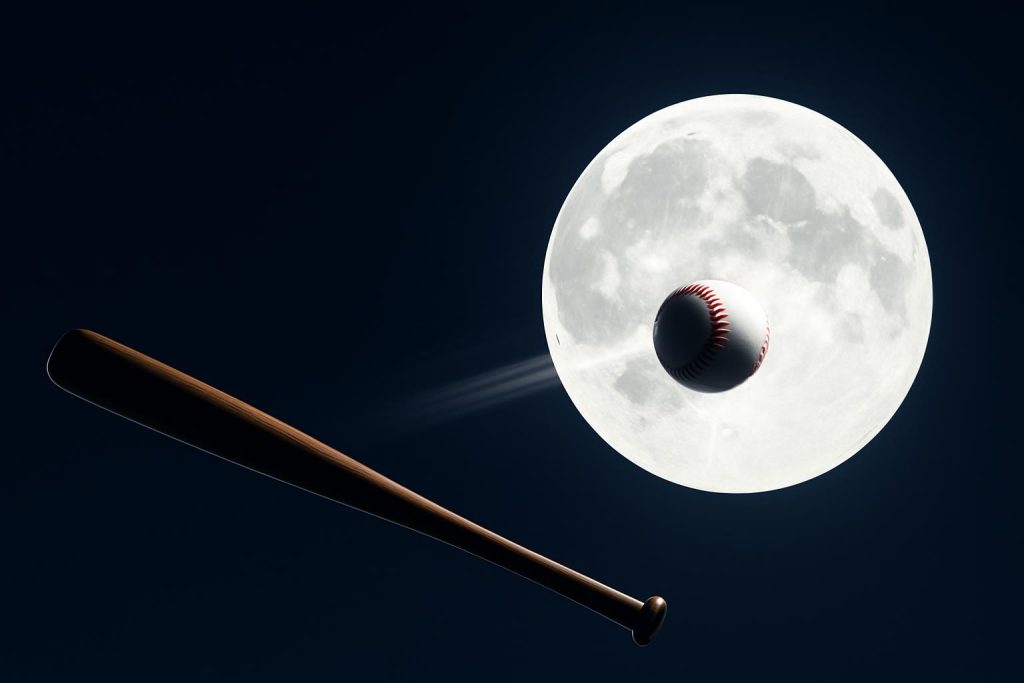
Moonshot home runs grab attention the moment the ball leaves the bat. The arc is steep, the hang time is long, and everyone in the park knows it is not coming back. The word itself has a story, shaped by baseball eras, ballpark design, technology, and the way fans consume highlights. This guide explains where the term came from, how it changed, what defines a true moonshot, and how hitters actually train to hit them. By the end, you will understand the history, the physics, the broadcast language, and the practical steps to develop the power and consistency that produce these high, majestic drives.
The Origins of Moonshot: Early Baseball Slang
From long flies to signature slang
Baseball has always had colorful ways to describe home runs. In the early decades, writers and radio voices leaned on simple phrases for long flies and towering drives. As stadiums grew and crowds swelled, special blasts earned special labels. The longer and higher the arc, the more it stood out from routine homers.
The postwar boom and the rise of spectacle
After World War II, baseball drew massive audiences and added layers of showmanship. Bigger sluggers, livelier baseballs, and changes in travel and scheduling helped push offense. Certain blasts turned into moments fans talked about for years. The tallest, most dramatic shots started to build a new identity in the language.
Television made the arc the star
When televised games became common, viewers could finally see the full flight of the ball. Broadcasters emphasized height and hang time. The camera angle that rides the arc to the upper deck made a deep impression. The term moonshot fit what people were watching: home runs defined as much by their height as their distance. The more camera angles improved, the more that visual stuck.
The Physics Behind a Moonshot
What makes a ball climb
Two variables define most home run outcomes: exit velocity and launch angle. Exit velocity is the speed of the ball off the bat. Launch angle is the vertical angle at which the ball leaves the bat. For typical over-the-fence results, the most efficient launch angles sit roughly in the mid-20s to low-30s degrees when paired with high exit velocity. Moonshots tend to push the angle higher while maintaining enough speed to carry the wall.
Height and hang time
Moonshots often reach high apexes and produce extended hang time. This can mean less total distance compared with a lower, faster line drive, but more visual drama. Even when distance is extreme, the visual cue of height leads viewers to call it a moonshot. A 430-foot blast that peaks well above common trajectories will earn the label faster than a 450-foot laser that barely clears at a shallow angle.
Spin and air conditions
Backspin helps a ball resist gravity by creating lift, especially in dry, warm air. Sidespin can kill distance if the ball slices or hooks out of the sweet flight path. Air density matters. High altitude, warm temperatures, and low humidity reduce drag. Wind and roof status in domed parks can also influence carry and perceived height.
Park dimensions and backdrop
Some parks showcase moonshots better than others. Deep alleys, high upper decks, or visible landmarks add context and make height obvious to the audience. In smaller parks, the ball may leave the field before the viewer appreciates the arc. In larger stadiums, the ball has time and space to rise and hang, which sells the effect.
How the Term Shifted in Different Eras
Dead-ball vs. live-ball expectations
In the dead-ball era, the ball itself and playing strategies limited home runs. Long flies were rare and usually tied to outfield misplays or cavernous parks. The modern live-ball style, beginning in the 1920s, elevated homers from novelty to staple. As the game moved through later decades with better training and more specialized hitting instruction, the highest drives became notable as a special subcategory of home runs.
The muscle era and the big arc
Fans in the late 20th century saw power spikes that re-centered expectations. The ball flew farther on average, and hitters chased pitches they could lift. With more homers in the game, the most towering shots needed a distinct tag. Moonshot filled that gap. A moonshot was not just far. It was unapologetically high.
The Statcast era sharpened definitions
Modern tracking provides exact measurements of exit velocity, launch angle, apex height, and hang time. This data confirmed what fans felt. The term applies primarily to extreme height and long hang times, often but not always paired with elite distance. A 115 mph line drive can go far but does not feel like a moonshot. A 108 mph drive at a steep angle that climbs into the skyline does.
Moonshot vs. Tape-Measure vs. No-Doubt
Different labels for different effects
Baseball vocabulary distinguishes the look and feel of a homer:
- Moonshot: Emphasizes height and hang time. The ball climbs and seems to hang as the crowd tracks it to the upper levels or far beyond standard landing zones.
- Tape-measure: Emphasizes distance. The blast travels a long way, sometimes to uncommon areas of a park or entirely out of the stadium grounds.
- No-doubt: Emphasizes certainty off the bat. Everyone knows it is gone immediately, regardless of height or distance.
These labels overlap. A single swing can be all three. In usage today, moonshot is the first choice when the arc is the lasting image.
Cultural Moments That Cemented the Term
Highlights on loop
Television and highlight shows conditioned fans to look for apex and hang time. The slow climb to the roof line or upper deck plays well in replays. The visual leaves a clear memory and gives the word moonshot a natural fit.
Broadcasters and shared language
Broadcasters reinforced the term by using it in key moments. As fans heard it more often, the use multiplied across markets. Social media then amplified any towering blast within seconds.
How Broadcasters Use Moonshot Today
Context clues to listen for
Announcers typically reserve moonshot for balls with unusual height. They will reference upper decks, scoreboards, concourses, or visible structures to frame the arc. They might note hang time and the way fielders stop moving to watch. On data-driven broadcasts, they may cite apex height, launch angle, and exit speed to underscore why a particular shot stands out.
Training to Hit More Moonshots: What Really Helps
Focus on speed, flush contact, and efficient loft
Moonshots require a combination of bat speed, solid contact, and a launch angle that is high but not wasteful. The core skills include strength to produce velocity, a repeatable swing path that stays through the zone, and timing to hit the ball in the ideal contact window. Practice should build speed and control together.
Product review: Tanner Tee Original
A stable batting tee with a durable stem helps hitters control launch angle and contact point. Consistent tee work reinforces the path needed to lift the ball without popping it up.
Why it helps: Allows precise placement of the ball at different heights and depths, so hitters can train the attack angle that produces clean loft. The sturdy base minimizes wobble, supporting high-rep sessions.
Best for: Hitters at any level who want reliable tee work to engrain a repeatable swing plane for lifted contact.
Potential downsides: Heavier than travel tees and not as compact for transport. Requires space for safe indoor use.
Product review: Blast Baseball Swing Analyzer

A bat-mounted sensor turns swings into measurable data. Attack angle, bat speed, and time to contact all correlate with the type of loft that helps produce moonshots.
Why it helps: Provides instant feedback on swing metrics. You can target a sustainable attack angle and improve plane efficiency without guessing.
Best for: Players who train alone or want objective benchmarks. Coaches building structured programs around measurable improvements.
Potential downsides: Requires comfort with app setup and data interpretation. Heavy cage contact can loosen attachment if not mounted securely.
Product review: Pocket Radar Smart Coach
Exit velocity and bat-to-ball quality are critical. A compact radar tool helps quantify progress in real time during tee work, front toss, or machine sessions.
Why it helps: Measures ball speed right off the bat. When paired with swing metrics, hitters see whether swing changes translate to real power.
Best for: Hitters tracking exit velocity milestones. Coaches who want a simple device with quick feedback during practice.
Potential downsides: Requires battery management and correct placement behind the plate or net for accurate reads. Indoor spaces can cause misreads without clean sightlines.
Product review: PowerNet Weighted Hitting Training Balls
Weighted balls for hitting exaggerate feedback. If you roll the barrel or cut across the ball, the miss becomes obvious. Solid contact produces a heavy, centered flight that translates back to standard baseballs.
Why it helps: Trains barrel control and path. A consistent upward angle with flush contact sends these balls on a clean rise, reinforcing the mechanics that later produce moonshots with a game ball.
Best for: Hitters looking to improve feel for centered contact and direction through the ball. Good for limited spaces since flight is shorter than regular baseballs.
Potential downsides: Overuse can stress hands and forearms. Balance weighted-ball work with standard balls and adequate recovery.
Programming your training
Organize work around three pillars: bat speed development, clean loft, and consistent contact. Rotate through tee drills at different contact points, front toss with angle constraints, and machine reps with fastballs and playable breaking balls. Track exit velocity and attack angle. Add strength and mobility sessions that prioritize hips, core, and thoracic rotation. Finish with recovery and soft tissue work to keep volume sustainable.
How to Spot a True Moonshot in Real Time
Visual cues
- Apex height relative to stadium tiers. If the ball climbs into or above the second deck or matches scoreboard height lines, you are likely watching a moonshot.
- Hang time that allows fielders and fans to watch. Outfielders may glance up and stop their pursuit.
- Ball trajectory that clears near landmarks rather than just the wall line.
Audio and body language
- Contact sound plus crowd swell usually signals a clean barrel.
- Pitcher and catcher reactions can be telling. Immediate head tilt up and stillness often means the ball is not returnable.
Data tells the full story
- Launch angle trends high, often in the low to mid-30s or more, with enough exit velocity to carry.
- Apex height and hang time on broadcast graphics will often confirm the visual impression.
Moonshots by Player Type
Pull power vs. opposite-field power
Pull-side moonshots are more common because hitters naturally produce higher exit velocities when pulling. Opposite-field moonshots require exceptional strength and timing. When you see a high arc to the opposite field, it reflects elite barrel control and speed.
Lefty vs. righty and park geometry
Handedness interacts with each park’s dimensions. Some left-field porches sit closer, while some right-field decks are higher or set back. A moonshot label may occur more often to one side depending on deck heights, wind patterns, or visual backdrops that amplify height.
Swing path profiles
Hitters with naturally uphill paths are more likely to produce height. The key is not overdoing it. Too much uppercut turns into pop-ups or mishit fly balls. The best moonshot hitters keep the barrel in the zone long enough to square the ball while aiming for efficient loft, not exaggerated uppercuts.
Common Misconceptions
Distance alone is not the test
A low bullet that clears the farthest part of the park can outdistance many high drives, but it may not feel like a moonshot without the visible height. Moonshot implies an arc that captures attention, not only total feet.
All high fly balls are not moonshots
Pop flies that drift out in short porches do not fit. A moonshot pairs height with authority off the bat. Ballistic energy and apex height have to match.
Moonshots are not always pull-side
Opposite-field moonshots do happen and leave a strong impression. They just require a refined combination of speed and timing that fewer hitters possess consistently.
Drills That Build Moonshot Traits
Tee ladder for launch angle
Set the tee low, medium, and high in sequence. Work through 10 swings at each height. Keep the barrel path consistent and track launch angle with a sensor or visual flight against a net. The goal is clean loft without slicing across the ball.
Front-toss window drill
Place a visual window on a net with tape to represent a desired launch window. Aim every swing through the window. Record exit speed and note whether the ball leaves on a rising trajectory with spin that carries.
Machine reps with fastball focus
Use consistent fastball settings to find timing. Once you lock in, raise the machine slightly to challenge top-of-zone contact. Moonshots often come from balls driven with authority in the upper half when the hitter gets on plane without dipping the back shoulder too far.
Why the Term Still Matters
Shared language builds the moment
Fans rally around words that instantly convey what happened. Moonshot tells you the story of the ball in the air. Players, coaches, and broadcasters understand it the same way. It frames the athletic skill in a compact, accurate term.
Data now supports the eye test
Modern measurements do not replace the thrill. They enhance it. Apex height, hang time, and exit velocity validate why a swing felt special. The term moonshot benefits from both tradition and science.
Quick Checklist: Is It a Moonshot
- High launch angle with enough exit velocity to carry deep
- Visible climb and extended hang time
- Landmark-level height relative to decks or scoreboards
- Immediate reaction from fielders and crowd
Putting It All Together
For players
Build bat speed, engrain an efficient upward path, and practice consistent timing. Use tools that quantify swing metrics and ball speed so you can track progress across sessions. Stay disciplined with recovery and safety to sustain volume.
For coaches
Define target metrics for attack angle and exit velocity based on the player’s profile. Structure drills around windows that teach sustainable loft. Use clear feedback loops and keep cues simple.
For fans
Watch the arc, not just the distance graphic. Follow how the ball climbs compared to the stadium’s architecture. Listen for hang time and crowd reaction. You will recognize a true moonshot before the numbers appear on screen.
Conclusion
Moonshot home runs came to life through decades of evolving baseball language, broadcast storytelling, and new technology that highlighted every detail of the ball’s flight. The term endures because it captures the precise quality that makes certain homers unforgettable. Height, hang time, and clean power define the visual. Training for moonshots is not about chasing extremes. It is about mastering bat speed, contact quality, and a launch window that produces efficient loft. With a clear plan, useful tools, and smart recovery, hitters can stack the skills that turn solid contact into memorable arcs. Understanding the term’s history and the physics behind it helps fans appreciate the craft, and it gives players a roadmap to build the kind of power that lights up a ballpark.