
We are reader supported. When you purchase through links on our site, we may earn an affiliate commission. Also, as an Amazon affiliate, we earn from qualifying purchases.
Some baseball moments refuse to fade. They get replayed, debated, and taught to the next generation. The Pine Tar Incident is one of those. It started with a clean swing by George Brett and turned into a case study in how the letter of the law can collide with the spirit of the game. It also became a landmark lesson on the power and limits of baseball’s unwritten rules.
This story is easy to follow yet rich with meaning. It involves a star hitter, a fierce rivalry, a strict interpretation of a small equipment rule, and a stunning reversal by the league office. Most of all, it shows how a sport polices itself both by written rules and by shared expectations that never appear in a rulebook.
By the end, you will understand what happened, why it mattered, and how it still shapes conversations about fairness and gamesmanship in baseball today.
Setting the Stage
It was July 24, 1983, at Yankee Stadium. The Kansas City Royals and the New York Yankees were deep into a long rivalry. George Brett, a future Hall of Famer and one of the most feared hitters of his era, stepped in against Goose Gossage. The moment was tense, the stakes felt high, and the result was loud. Brett crushed a go-ahead home run to right field late in the game. The Royals had the lead. The crowd had a spark. Then everything stopped.
Yankees manager Billy Martin walked to the umpires and argued that Brett’s bat had too much pine tar. The umpires gathered. The stadium waited. A routine check of equipment turned into one of the most famous rulings in Major League Baseball history.
What Pine Tar Is and Why It Matters
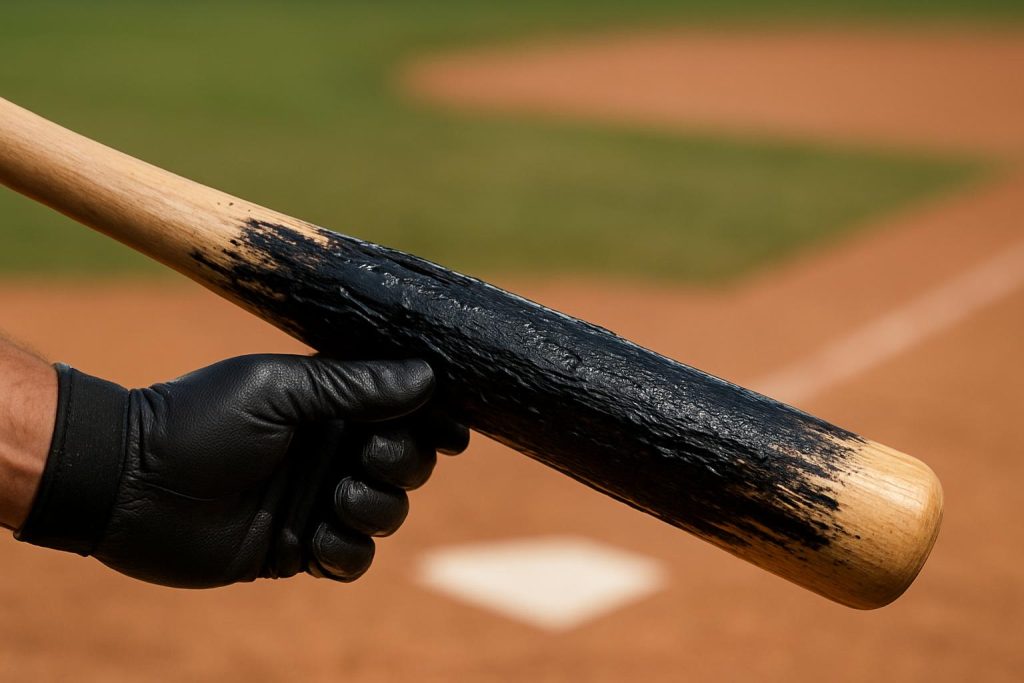
Pine tar is a sticky substance that hitters apply to the handle of a bat. It improves grip and control, especially in hot or humid weather. A better grip helps a hitter keep the bat from slipping and square up pitches with more confidence.
MLB allows pine tar on bats but limits where it can go. At the time, the rule allowed pine tar only on the lower 18 inches of the bat handle. The purpose was not to aid cheating. The purpose was simple and practical. Too much pine tar on the barrel could smear the baseball, darken it, and make it harder and more expensive for teams to keep replacing balls.
So the written rule had a precise number. Eighteen inches. The spirit behind it was about equipment maintenance and clean baseballs. Nobody thought this rule would decide a game that late in the day. Until it did.
The Call That Ignited It All
After Brett’s home run, the Yankees protested that the pine tar on his bat extended beyond the allowed 18 inches. The umpiring crew decided to measure. They did not have a ruler handy, so they used the width of home plate as a reference. Home plate is 17 inches wide. Laying the bat against the plate gave them a quick comparison point for the line of pine tar.
The crew ruled that the pine tar had climbed past the legal limit. Then they took a step that shocked everyone. They nullified the home run and called Brett out. The go-ahead blast was erased. The inning was over. The Yankees had a win back within reach.
What followed is burned into baseball memory. Brett burst out of the dugout in a fury, sprinting straight at the plate umpire. Teammates and coaches restrained him. The image of Brett charging has become the instant snapshot of the Pine Tar Incident.
Letter of the Law vs. Spirit of the Rule
Here is the core issue. The rule restricted pine tar to the lower 18 inches of the bat. But what was the penalty if the tar crept too far? The umpires treated it as grounds to call the batter out and wipe the play away. That interpretation enforced the letter of the law in a strict way. It also flipped the game on one equipment check.
The Royals saw this as a misuse of a technical rule. They argued that the rule existed to protect baseballs, not to wipe away a well-earned hit. Brett did not gain extra pop from sticky tar. Grip helps control the swing, not the physics of the bat head. The difference between tar on the handle and tar on the barrel is not about added power. It is about keeping baseballs clean. The Royals believed the umpires punished the wrong party with the wrong penalty.
The Protest and the League’s Decision
The Royals filed a formal protest with the American League office. They asked the league to review the decision, reinstate the home run, and resume the game from the point after the ball cleared the fence.
American League president Lee MacPhail studied the case. He looked at the language of the rule and the intent behind it. He concluded that the penalty should not have been an out. The reason was straightforward. The rule was never meant to undo live action. It was written to keep baseballs in playable condition and control costs. A bat with pine tar beyond 18 inches should be removed from the game. The batter should not be called out, and a completed play like a home run should not be erased.
MacPhail reinstated Brett’s home run. The game would pick up weeks later at Yankee Stadium from the moment after the home run had scored. The Royals would have the lead again. The score would reflect Brett’s blast. This ruling placed intent over technicality and corrected the earlier interpretation on the field.
The Strange Resumption
When the game resumed weeks later, it came with odd tactics that added another layer to the legend. The Yankees tried fresh appeals, claiming that Brett and the runner ahead of him had missed bases on the home run trot. The league had prepared for that scenario. Measures were in place to affirm that the runners had touched their bases properly during the original play, and the appeals gained no traction.
The Yankees also shuffled players into unusual positions, including Ron Guidry in center field and Don Mattingly at second base. It was a final attempt to find an angle in a restarted game that had already been decided in spirit. The Royals held the lead and won 5-4.
What the Players Knew and the Unwritten Rules
Baseball polices behavior through two systems. One system is the rulebook. The other is the network of customs and expectations known as the unwritten rules. The Pine Tar Incident sits at the intersection of both.
Among players, a common understanding existed. If a hitter used pine tar for grip and the tar crept a bit too far, the fair response was to remove the bat. You did not try to erase a clean swing with a technicality that had nothing to do with competitive advantage. You asked the umpires to take the bat out of play. You did not try to take an out and flip the game.
By appealing for an out and a nullified home run, the Yankees pushed the edges of acceptable gamesmanship. The move was legal as far as a literal reading went. Still, it violated what many inside the sport felt was the right way to handle a minor equipment infraction. That is why so many players and coaches sided with the Royals after the fact. It is also why the league’s decision landed with force. The ruling put the written standard back in line with the game’s shared understanding.
Why This Incident Still Matters
The Pine Tar Incident changed more than a box score. It clarified how MLB would handle similar equipment questions going forward. In the aftermath, the league approach aligned with MacPhail’s reasoning. If a bat has pine tar extending beyond the limit, remove the bat from play. Do not call the batter out. Do not undo a completed play.
This adjustment mattered for fairness and for perception. Fans saw a clear resolution that fit the purpose of the rule. Players recognized that future games would not be decided by a grip issue with no competitive edge. Umpires received a workable remedy that kept the game moving and protected its integrity.
Breaking Down the Key Elements
The Rule
At the time of the incident, MLB limited pine tar to the lower 18 inches of the bat. The reason was maintenance and visibility of the baseball, not performance. The rule did not intend to provide a path to erase a hit retroactively.
The Measurement
Home plate is 17 inches wide. The umpires used the plate as a makeshift guide to judge whether the pine tar on Brett’s bat exceeded 18 inches. The law of the rule was invoked through that quick check. The problem was not the measurement itself. The problem was the penalty the umpires chose to apply.
The Penalty
Calling Brett out and erasing the home run was the pivot point. That penalty made an equipment upkeep rule outweigh the outcome of a pure baseball play. The league later made clear that this was not the correct remedy.
The Protest
The Royals argued that the action on the field should stand. They held that the rule’s goal was to protect balls, not decide games. The league accepted that logic. The home run stood. The bat would not be allowed in play going forward.
The Resumption
When the game resumed weeks later, the Royals kept the lead earned by Brett’s swing. The Yankees tried unusual moves, but the outcome stayed the same. The Royals won 5-4.
Lessons for Today
Intent Matters
Rules have purposes, not just numbers. Good officiating and good governance look at both the letter and the intent. The Pine Tar ruling taught the league to calibrate penalties so they fit the goal of the rule.
Fairness Over Technicalities
A clean swing that sends a ball over the fence should count unless the hitter used something that truly distorts competition. Pine tar for grip is not that. The incident marked a line between gamesmanship and fairness.
Clarity Prevents Chaos
When rules leave space for harsh or confusing penalties, disputes grow. The league’s clarification after this game reduced that space. It set a simple expectation for bat legality checks and protected the legitimacy of outcomes.
Rivalries Influence Choices
Big rivalries add pressure. Managers seek edges wherever they can. The Yankees used the rule to pursue a win. The Royals used the process to defend a result. The league had to step in to stabilize the competitive field. That is often how high-stakes sports work.
Why Fans Still Talk About It
The visual of Brett sprinting at the umpire creates instant drama. The backstory of a small rule flipping a big game is easy to tell. The resolution provides satisfaction because it aligns with common sense. The bat itself later drew attention as a piece of baseball history, and the story stayed alive in highlights, documentaries, and fan debates.
This is also a case study coaches use for teaching. It helps players understand how rules are applied, why intent matters, and how to react under stress. It shows that protests can be a fair part of the process when a call feels out of line with the sport’s values.
Common Misunderstandings Cleared Up
Did Pine Tar Make the Ball Fly Farther
No. Pine tar improves grip. It does not add force to the barrel or make a ball carry farther on contact. The rule limited pine tar placement to protect baseballs and their visibility, not to control exit velocity or distance.
Did the Umpires Invent the Plate Measurement
No. Using the width of home plate as a guide was a practical move when a ruler was not available. It provided a quick comparison to the 18 inch limit. The issue was not the method of measuring. It was the decision to call Brett out and erase the play.
Was the League Protecting a Star
No. The league was protecting the intent of the rule and the integrity of the game. The ruling would have applied to any hitter. The core idea was that a bat with too much pine tar should be removed, not that a legitimate home run should be wiped away after the fact.
How This Shaped Future Rule Enforcement
After the Pine Tar Incident, MLB practice aligned with the league’s decision. Umpires and teams understood that excessive pine tar would lead to the bat being taken out of the game. No outs would be awarded. No hits would be undone. That stable standard has reduced conflict and clarified expectations for everyone involved.
Takeaways for Players and Coaches
Know the Rule and Its Purpose
Technical knowledge prevents avoidable trouble. Players should keep pine tar within the marked region of the handle. Coaches should monitor equipment and remind hitters where the limit sits.
Focus on What Decides Games
Grip aids like pine tar should never be the story. Mechanics, approach, and preparation decide results. Respect the equipment boundaries, and keep the attention on the quality of play.
Use the Protest Process Wisely
Protests exist for good reasons. When a call conflicts with the spirit of a rule, managers should use the system to seek a fair outcome. That is not cheap. That is part of the integrity framework of the sport.
Why the Incident Fits the Unwritten Code
Baseball’s unwritten rules reward fairness and punish needless gamesmanship. They expect you to compete hard within standards that protect the opponent’s right to a fair chance. This incident drew a line. It reminded everyone that a technical violation about sticky residue on a bat handle should not override a legitimate swing. It confirmed that the culture of the game values outcomes shaped by skill, not by obscure penalties.
Conclusion
The Pine Tar Incident began with a home run and turned into a referendum on how baseball should balance rules and fairness. George Brett did what great hitters do. He punished a pitch in a big spot. The Yankees did what sharp managers do. They tried to use the rulebook to their advantage. The umpires made a call that emphasized strict compliance. The league stepped in to honor the spirit of the rule and restore the play.
The final result delivered a clear message. Equipment rules exist to preserve the game, not to decide it. Penalties must match the purpose of the law. And when written text clashes with the sport’s core values, leadership must align them again. That is why fans still talk about the Pine Tar Incident. It protected the heart of competition while teaching everyone how to apply rules with wisdom and restraint.
FAQ
Q: What is pine tar and why do hitters use it
A: Pine tar is a sticky substance that hitters apply to the handle of a bat to improve grip and control, and MLB allows it on bats but limits it to the lower 18 inches of the handle.
Q: What happened during the Pine Tar Incident on July 24, 1983
A: George Brett hit a go ahead home run at Yankee Stadium, the Yankees protested that his bat had pine tar extending beyond 18 inches, the umpires measured using the 17 inch width of home plate, nullified the home run, and called him out, the Royals protested, the American League president reinstated the home run, the game resumed weeks later, and the Royals won 5 4.
Q: Why did the league overturn the out call
A: The league found that the pine tar rule existed to protect baseballs and control costs, not to erase completed plays, so the proper remedy was to remove the bat from play rather than call the batter out.
Q: How did the resumed game end and what unusual tactics appeared
A: The game resumed weeks later with the Royals holding the lead, the Yankees tried unusual tactics including Ron Guidry in center field and Don Mattingly at second base, and the Royals won 5 4.
Q: What did the Pine Tar Incident reveal about baseball’s unwritten rules
A: It showed that many inside the sport believe you should not use a technicality to erase a clean swing, and that fairness and the spirit of the rule should outweigh gamesmanship when an equipment issue does not create a competitive advantage.