
We are reader supported. When you purchase through links on our site, we may earn an affiliate commission. Also, as an Amazon affiliate, we earn from qualifying purchases.
Catching a foul ball is exciting, but it comes with real risk. A ball can arrive fast, change direction late, and hit areas you do not expect. With a plan and good habits, you can raise your chances and lower your risk. This guide gives you clear steps from seat selection to safe catching mechanics, so you enjoy the thrill without putting yourself or others in danger.
Introduction
Every season, fans get hurt by foul balls. Most incidents are avoidable with awareness, smart choices, and simple technique. You do not need to be an athlete. You do need to stay alert, respect your neighbors, and know when not to reach. Read this before your next game and you will be ready.
Know the Risks Before You Try
Foul balls can travel faster than you expect. Line drives reach seats in a second or less. Pop-ups can drift in the wind and drop behind you. Spin can make a ball curve toward or away from your row. Railings, steps, seat backs, and cup holders create hard surfaces that can change the path or bounce the ball into your face.
Sun, shadows, and bright stadium lights can hide the ball at the worst moment. Netting reduces risk near home plate and the dugouts, but balls can still clear or hook around the net in some areas. Treat every pitch as live. If you are not ready, do not reach.
Choose Your Seat With Purpose
Hot Zones That Balance Chance and Safety
Seats down the first and third base lines see many foul balls. The best mix of chance and safety is usually in the first 10 to 20 rows beyond the dugouts and outside the extended netting. These sections get a steady stream of playable balls but are not as dangerous as the very front rail or the extreme corners near the foul poles. Upper deck corners see fewer balls and more late movement due to height and wind.
If you are new or bringing family, pick seats behind netting or a bit higher up the lines. You can still catch caroms and toss-ups without the fastest liners.
Family-Friendly Spots
When bringing kids, choose seats behind protective netting or several rows up in the infield sections. Keep an adult between the child and the field. Avoid aisle ends and front-row rails, where reachers and late bounces cause chaos. Visibility is good a bit higher, and you have more time to react.
Aisles and Railings
Aisles and rails are danger zones. Running in an aisle leads to falls. Leaning over a rail leads to loss of balance. If your goal is a safe experience, avoid front-row rails and steep stairways. Keep to a seat where you can plant your feet and catch in control.
Gear That Keeps You Safe
Glove Basics
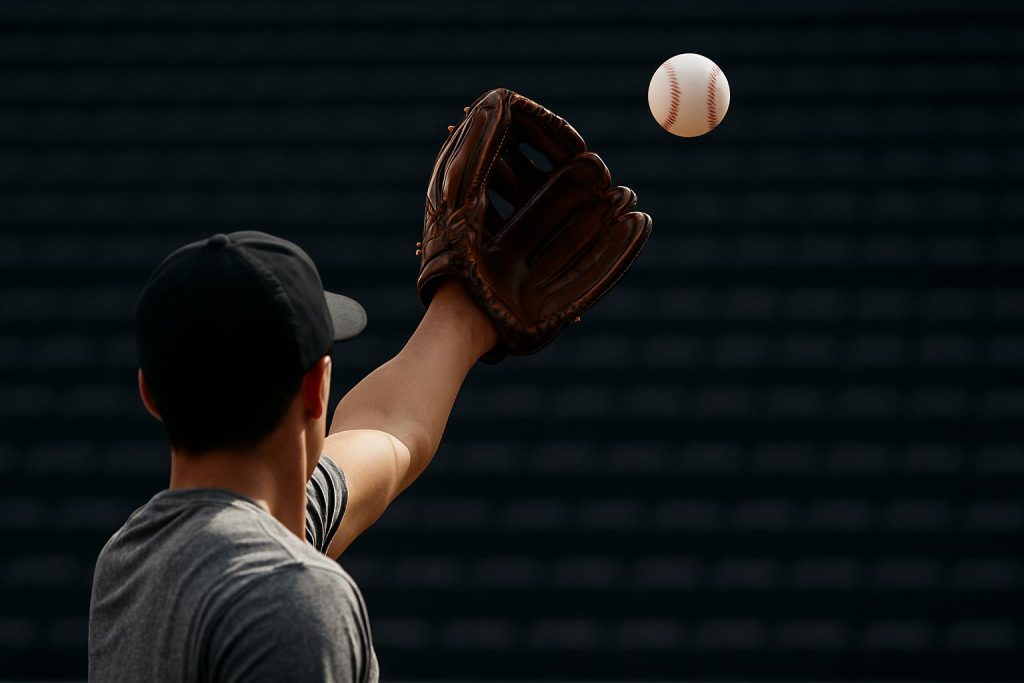
A glove reduces sting and increases your margin for error. Bring a broken-in glove that opens and closes easily. Choose a size that lets you control the pocket with one hand. You should be able to raise it quickly to eye level and secure the ball with your free hand.
Eyes and Hands
Polarized sunglasses help on day games and dusky starts. A cap or brim shadows your eyes. Closed-toe shoes protect your feet during scrambles. Keep one hand free at all times. Carry food and drinks in your non-dominant hand or set them down between pitches. Put your phone away when the pitcher is set. A phone lanyard or secure pocket prevents drops during quick moves.
Warm Up Your Eyes and Hands
Use Batting Practice
Arrive early for batting practice. Track every ball off the bat. Call out in your head if it is slice, hook, or straight. Follow the ball into a glove or seat. This builds depth judgment before the game speeds up.
Quick Hand Prep
Before first pitch, do a short routine. Gently stretch fingers, wrists, and shoulders. Open and close your glove several times. If barehanding, clap lightly and practice soft hands by receiving your own tosses. Warm hands react faster and sting less.
Read the Play in Real Time
Handedness and Contact
Right-handed hitters tend to slice balls toward right field seats. Left-handed hitters tend to hook balls toward right field with curve toward the line and toward left field lines with curve toward the line, depending on swing and contact point. Watch where they are late or early in previous swings. Late swings push balls opposite field with more slice. Early swings pull balls with more hook.
Spin and Flight
Backspin keeps the ball up and carrying. Topspin makes it dive and kick forward off seats. Side spin curves the ball left or right. If you see a ball start at you and then tail, adjust with small steps. Move your feet early. Do not reach across your body without moving your base.
Wind and Roof
Open-air parks create drift down the lines. Flags and banners tell you direction. In a closed roof, balls hold truer lines but can hit beams and return fast. Always be ready for a late change.
The Safe Catch Mechanics
Protect First
Your first goal is to protect your face and head. Rise into a ready stance with knees slightly bent, feet shoulder-width, and eyes steady. If the ball is coming too fast or you lose it in the glare, cover your face with your forearms and tuck your chin. It is fine to let the ball go.
Glove Technique
Present the glove in front of your face and chest, fingers up for high balls and fingers down for waist-high shots. Give with the ball as it arrives to reduce rebound. Secure the ball with your free hand right away. If the row is crowded, sit down or drop into your seat after control so you do not topple over others.
Barehand Technique
Use soft hands. Meet the ball slightly off center and let it slow as your hand yields. Do not stab hard in front of your face. If in doubt, block with your forearms and let it drop, then pick it up safely at your feet. Protect your fingers. A clean trap against the chest is safer than a risky snatch.
Secure the Ball
Once you have it, bring it to your chest or underarm. Sit down if people are jostling. Check your hands for scrapes. If your palm stings, wiggle fingers and flex your wrist slowly.
When Not to Go For It
No Reaching Over Rails
Never lean over railings. The drop and leverage work against you. Stay inside your row and within your balance.
No Diving Across Seats
Do not dive or lunge across seats. Seat backs and cup holders injure ribs and wrists. You can also hurt fans around you. If the catch requires a leap across people, let it go.
Yield to Safety
If a child, an older fan, or anyone with limited mobility is in the path, shield them and stop your reach. Your job becomes protection, not possession. If you cannot track the ball under lights or sun, cover your head and duck.
Crowd Safety and Etiquette
Communicate Early
Use a clear voice to call for the ball if it is safe. Say yours or mine if you are with friends. Do this early so people do not collide at the last moment. Keep your elbows down and your catch zone tight.
Respect Your Neighbors
Do not reach across another fan. Do not shove or box out. Many fans choose to hand the ball to a child nearby. If you cause contact or a drink spill, apologize and check for injuries. Ushers can help with towels and first aid. Return to your seat quickly and avoid blocking the aisle during live play.
Handling Ricochets and Seat Bounces
Read the Carom
Topspin makes forward kicks off seat backs. Backspin can bounce up softly. Metal rails create fast, sharp rebounds. If you see a ricochet coming at face height, raise your forearms as a shield first, then try for a controlled trap against your chest. Keep your feet planted and avoid sudden turns that can trip neighbors.
Trap, Then Tuck
On bounces in your row, bring the ball into your body rather than trying to palm the hop. Let the seat or your body absorb the speed, then close hands around it and sit.
Day vs Night Games
Managing Sun
In day games, know where the sun sits relative to home plate. Use sunglasses as the pitcher sets, then push the brim down to cut glare. If a ball enters the sun, track it with your shoulders, not just your eyes. Move early to a spot where the sun is out of your direct view.
Under the Lights
At night, balls can flash through light banks and vanish for a moment. If you lose it, protect your face and listen for crowd cues. Only reengage when you see it again. Depth shifts are smaller at night, but late curves still happen with side spin.
If You Catch the Ball
After the Grab
Take a breath. Check your hands. If your palm is sore, flex fingers and rotate your wrist. If you scraped skin, use a sanitizing wipe and a small bandage from your bag or ask an usher for first aid.
Keep the Ball
Foul balls are keepsakes. Do not throw a foul ball back onto the field. Hold it until play stops if you need a photo. Keep your eyes on live pitches while you celebrate.
Bringing Kids to the Park
Teach a Simple Plan
Give children a basic ready position. Knees slightly bent, eyes on the batter, hands up. Seat them behind netting or higher along the lines. Place an adult on the field side of the child. If a ball comes hot, the adult shields first. Chasing the ball is second.
Right-Sized Gear
A small, soft glove helps a child close on gentle tosses or slow bounces. Sunglasses or a hat improve tracking. Tell them to sit and cover if they lose the ball in the lights or if the ball is coming fast.
Common Mistakes to Avoid
Screen Distraction
Looking at a phone during pitches is the top mistake. Put the phone away when the pitcher is ready. Between pitches is the time to text and post.
Bad Reach and Bad Seats
Reaching across others leads to collisions. Front-row rails and steep aisles raise injury risk. If you chose those seats, commit to safety first and pass on risky balls.
Hard Hands
Stabbing a hard ball with a stiff hand stings and pops it up. Use soft hands and let the ball come to you. Meet it early with a giving motion.
Food and Drinks in the Wrong Hand
Keep your dominant hand free. If you need to move quickly, set items down between pitches. Spills cause slips and missed catches.
Quick Checklist Before First Pitch
Seat choice: down the lines but not at the front rail or steep aisle. Safety gear: broken-in glove, sunglasses, hat, closed-toe shoes. Readiness: one hand free, phone away, quick hand and shoulder warm-up. Awareness: track batters, wind, and netting edges. Plan: protect face first, soft hands, no dives, no leaning over rails.
Advanced Tips for Serious Collectors
Chart Simple Tendencies
Watch two or three at-bats and note where balls land. Late swings push opposite field with slice. Early swings pull with hook. Move one or two seats in your row if you see a pattern and if your section allows it between innings.
Use Batting Practice Wisely
Batting practice produces many playable balls. Stay aware of other hitters on the field when you track shots. Ask an usher about safe spots. Follow stadium rules on movement and do not block walkways.
Conclusion
A safe catch is not luck. It is positioning, awareness, and clean mechanics. Choose the right seat, keep one hand free, protect your face first, and use soft hands. Respect your neighbors and yield on risky plays. Do this, and you can chase the memory without endangering yourself or others.
FAQ
Q: What is the safest way to catch a foul ball with a glove?
A: Stand balanced with knees slightly bent, eyes on the ball, present the glove in front of your face and chest, give with the ball, secure with the bare hand, then tuck the ball and sit if the row is crowded.
Q: Where should I sit to improve my chances while staying safe?
A: Down the lines near the dugouts in the first 10 to 20 rows outside the extended netting is the best mix. Avoid front-row rail seats, steep aisles, and extreme corners if you are not confident.
Q: What should I never do when going for a foul ball?
A: Do not lean over railings or into aisles, do not dive across seats, do not reach across another fan, and never take a ball away from a child or a fan who cannot move well.
Q: Is a glove required or can I catch barehanded?
A: A glove is safer and easier, but you can catch barehanded if you keep soft hands, meet the ball slightly off center, and let it slow as you absorb it. Protect your face first.
Q: How can I protect my kids at a game?
A: Sit behind netting or higher up the lines, keep an adult between the child and the field, teach a simple ready position, and focus on shielding first and chasing the ball second.