
We are reader supported. When you purchase through links on our site, we may earn an affiliate commission. Also, as an Amazon affiliate, we earn from qualifying purchases.
The one-knee down catcher stance is no longer a fad. It is a tool. Used well, it can boost receiving, ease workload, and fit the modern game. Used poorly, it can cost blocks, throws, and strikes. This guide breaks down what the stance is, why it works, where it fails, and how to train it. By the end, you will know when to use it, when to avoid it, and how to coach it with clarity.
Introduction
Catching has changed fast in the last decade. Pitchers throw harder, shape the ball more, and attack the bottom of the zone. Umpires are graded on accuracy. Teams measure everything. Out of that reality came a stance that helps a catcher be still, present the low pitch, and save their legs across long seasons.
That stance is the one-knee down look. It is simple in form and complex in detail. It rewards good body angles and precise glove action. It punishes late moves and poor planning. Learn it step by step, then layer it into your game with intent.
What One-Knee Down Means
The basic position
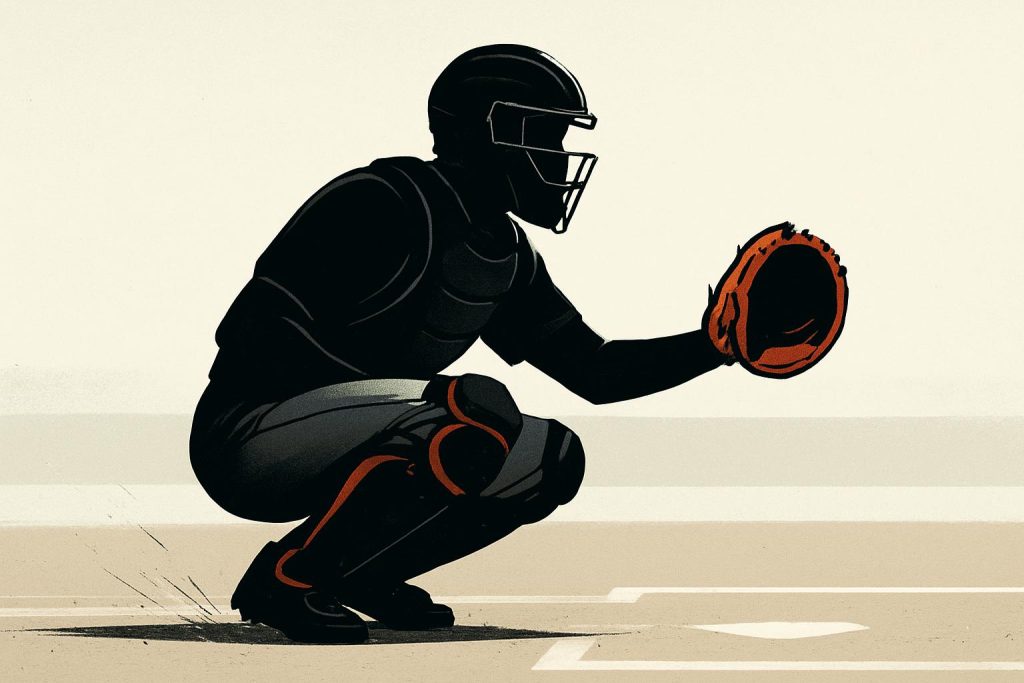
In a one-knee down stance, one knee rests on or near the ground while the other leg stays flexed to support the body. The chest hinges forward, the hips sit low, and the glove works under the ball. The down knee can be the left or right, chosen based on pitch location, pitcher plan, and throw needs.
Common variations
Catchers tend to use three versions. First, a receiving look with one knee down and a deep hip hinge to quiet the body and frame the bottom of the zone. Second, a hybrid look with the down knee light on the ground and the other foot ready to push, used when a throw is possible. Third, a quick-transition look where the knee starts down before the pitch and pops to a two-knee or secondary stance when the count or runner situation requires more mobility.
When it shows up most
Many catchers use one knee down most with empty bases and less than two strikes, especially with sinkers, breaking balls, and low fastballs. With runners on base or in two-strike counts, usage depends on skill, comfort, and game plan. Some stay knee down in all counts, while others go hybrid or return to a traditional secondary stance.
Why Catchers Adopt It
Modern pitching shapes the choice
More pitchers now aim at the lower third of the zone. One-knee down sets the catcher closer to those pitches, which reduces glove travel and noise. When the glove starts under the ball and rises subtly, umpires see a steady target, not a late jab. That stability is the core value of the stance.
Workload and durability matter
A full game behind the plate is hard on the knees and hips. Deeper hip hinges from a traditional squat, repeated thousands of times, add stress. One-knee down can lower that strain. Less squatting, fewer resets, and more stability can extend freshness late in games and late in the season.
Umpire perception rewards quiet movement
Umpires track the ball and the glove. Sharp glove drops or pops can bias a borderline call against the catcher. One-knee down encourages slow, small moves. Fewer extra signals reach the umpire. Borderline low pitches get a fair look.
The Biomechanics That Make It Work
Hip hinge and spine angle
The hips fold back and down. The spine tilts forward but stays strong. The head stays level. This puts the eyes on a steady plane, the glove under the pitch, and the chest ready to move down if needed.
Lower body geometry
The down knee touches lightly. The down-side foot can tuck with the toes under to create ground contact for a push. The up-side leg holds most of the weight, knee bent, foot flat, ready to drive. The angle of the shin should allow a quick shift forward for blocks or a rapid pivot for throws.
Glove path under to up
The glove starts below the expected point of contact. As the pitch arrives, the glove moves subtly up and toward the plate. The move is small and early. This path makes the bottom of the zone clearer and keeps the catch quiet.
Pros of One-Knee Down
Better presentation of low pitches
This is the main benefit. The stance places the glove under the ball. With a short, upward move, the catcher can receive low fastballs, sinkers, and breaking balls without a late stab. That steadiness leads to more low strikes over time when the pitch actually hits the zone.
Quieter body and improved target stability
The base is wider and lower. There is less swaying. The glove can float. A still body helps the pitcher trust the target and helps the umpire see it. Fewer corrections mean more consistent results.
Energy savings across long games
Fewer deep squats reduce fatigue. The body rests more between pitches while holding a strong posture. That can keep hands fast and decisions sharp in later innings, where small edges matter most.
Efficient blocks on predictable low action
On many low pitches, the catcher can drop the chest fast because the torso is already hinged forward. For breaking balls that finish down the middle, the path to the ground is short. With good technique, this stance can block well on straight-line dirt balls.
Clear lanes for the pitcher
A lower target can unclutter the view. Pitchers often relax when the glove holds still. The stance assists that calm by keeping movements compact. Calm pitchers throw more quality strikes.
Cons and Tradeoffs
Reduced lateral mobility for tough blocks
Extreme glove-side or arm-side blocks are harder when the wrong knee is down or when the base is too narrow. Lateral shuffles take more time from the ground. Missed reads or late reactions can turn into passed balls.
Slower transitions to throw on steals
From the ground, the first move to a throwing footwork pattern can be slower if not trained. Some catchers lose hip height and power during the rise. If the transfer or footwork is late, runners gain free bases.
High fastballs are tougher to receive cleanly
Starting low favors the bottom of the zone but makes high pitches more awkward. Reaching up from a knee can lift the torso and pull the glove off line. That can create a noisy catch and make umpires less friendly on the top edge.
Umpire and coach expectations at lower levels
Not all umpires see the stance the same way. In some leagues, a very low target may signal a non-competitive pitch before the ball is thrown. Some coaches also prefer a traditional look with runners on base for simpler execution.
Mobility and flexibility demands
Hips, adductors, and ankles need enough range to hinge forward and still move laterally. If a catcher lacks that range, the stance can stress the lower back or the groin. Mobility work becomes part of the job.
When To Use It
Best use cases
Empty bases with a pitcher who lives at the bottom of the zone is the cleanest case. Early in counts, with sinkers and breaking balls, the stance helps steal marginal lows while keeping the body fresh. It also fits game plans that prioritize weak contact on the ground.
With runners on base
Use a hybrid version. Keep the knee grazing the ground, toes tucked for push-off, and weight biased toward the up-side leg. This preserves receiving benefits while cutting throwing time. If a steal is likely, be ready to pop into a secondary stance just before the pitch.
Two-strike adjustments
With two strikes, many catchers raise into a more mobile stance if the pitcher may spike a breaking ball or miss arm side. If the plan is a breaking ball down the middle, one-knee down can still work. If the plan is up in the zone, shift to a secondary squat.
Pitcher types and pitch mixes
Sinker and slider pitchers pair well with one-knee down. High-ride four-seamers at the top less so. Match the stance to the approach. If the plan lives low, stay low. If the plan attacks up, build a stance that starts higher.
Which Knee Down
Right knee down
Right knee down often eases glove-side blocks for a right-handed catcher, because the left leg, which is up, can drive left. It can also set a clean lane for throws to third base. It fits many righty sinker profiles that break arm side to a right-handed batter.
Left knee down
Left knee down can help on arm-side blocks for a right-handed catcher, since the right leg stays up to drive to the right. It may also feel better for some left-handed receivers based on dominant patterns. The choice should match pitcher movement and catcher comfort.
Switch based on count and plan
Advanced catchers switch knees by pitch type and location. If a slider will finish glove side, right knee down may be favored to free the left leg. If a changeup will run arm side, left knee down can help. Train both sides.
Blocking From One Knee Down
Core principles
Read early. Move first with the chest. Turn the shoulders square to the ball. Drop the second knee to the ground as the chest reaches the line. Seal the five-hole with shin guards and glove. Keep the chin tucked and eyes on the short hop.
Straight-down blocks
These are efficient from one-knee down. The path is short. The key is not to lean and catch. Commit to the ground and let the gear do its job. Absorb with soft arms and a forward tilt.
Lateral blocks
These are the stress test. Pre-load the up-side foot to push in the needed direction. If the wrong knee is down for the pitch, consider shifting knees before the pitch or starting in secondary. Do not wait to see the bounce. Beat the hop with early chest movement.
Throwing From One Knee Down
Footwork choices
Two common options exist. First, a pop-to-plant move where the up-side leg steps and the torso rises to a compact throwing slot. Second, a knee-lift pivot where the down knee lifts and the hips rotate into a direct line to second base. Both demand a clean transfer near the center of the body.
Keys to quick releases
Start with the throwing hand near the glove for a fast transfer. Keep the head still as you rise. Turn the hips toward the target before the arm comes through. Aim for a strong front side rather than a long stride. Accuracy beats pure arm strength in most cases.
When to avoid knee down on steals
If the pitcher is slow to the plate or the runner is elite, the small time loss in rising can matter. In those cases, go to a secondary stance before the pitch to prioritize pop time and direction.
Coaching Cues That Work
Set-up cues
Eyes level. Chest over thigh. Glove under the ball. Down knee light. Up foot loaded. Toes of the down foot tucked to the ground. Hips hinged, not rounded. Breath steady.
Receiving cues
Beat the ball to the spot. Show the pocket to the pitcher. Move up through the catch. Hold the edge for a count. Do not drag the ball.
Blocking cues
Read dirt early. Chest first. Knees together. Chin down. Angle forward. Own the short hop.
Throwing cues
Transfer tight. Hips to target. Strong front side. Quick release. Finish through the throw.
Drills To Build Skill
Knee-down receive series
Start with dry reps. Set one knee down, hinge, and present. Partner tosses firm underhand balls at the bottom of the zone. Focus on catching with a slight up path and holding the ball still for a beat. Progress to machine work with low fastballs and breaking balls.
Block and recover ladder
From one-knee down, have a coach roll balls to middle, glove side, and arm side. Drop, seal, and recover to a throwing base. Add a verbal cue for a throw to simulate a steal. Keep reps short and crisp.
Pop and throw patterning
Set one knee down with a partner at second. On go, execute your chosen footwork. Transfer near the chest and throw. Track time to release and accuracy. Alternate both knees down across sets to build symmetry.
Hybrid stance timing
Practice starting knee down, then popping to a secondary stance at the pitcher hand break or at the two-strike sign. This builds the discipline to change looks on cue without panic.
Common Mistakes To Avoid
Starting too tall
Standing the torso too upright defeats the purpose. It creates long glove paths and late blocks. Keep the hinge.
Letting the glove drift
If the glove floats outward or drops late, umpires see noise. Lock the wrist, move early, and be small.
Wrong knee for the pitch
Patterns matter. If the pitch will run arm side, choose the knee that frees the push in that direction. Adjust by plan, not by habit.
Late transitions with runners
Waiting too long to rise on steals or to move on dirt balls costs time. Either stay fully committed to the stance with trained footwork or shift earlier based on the count and runner.
Weight on the heels
Sitting back kills mobility. Keep pressure through the balls of the feet, even when the knee is down. That pressure gives you a first step.
Equipment and Setup Notes
Shin guard mobility
Make sure the knee hinge moves freely when one knee is down. Straps that are too tight can restrict the seal on blocks and slow transitions.
Toe position on the down side
Tuck the toes under rather than flopping the foot flat. Ground contact through the toes gives a push point for shuffles and rises.
Knee comfort
Some catchers use a thin pad or adjust strap placement to reduce pressure on the down knee. Comfort helps consistency over many pitches.
Trends Across the Game
Rapid adoption at higher levels
In the past decade, many professional catchers began using one-knee down for a large share of pitches, especially with empty bases. The stance aligns with modern receiving priorities and with data that values strike conversion at the bottom edge.
Hybrid looks with the running game in mind
As steals increased in recent seasons, more catchers shifted to hybrid versions when a throw might be needed. The goal is to keep the receiving benefit while protecting pop time. That balance is now common across leagues.
Player development focus
Youth and amateur programs now teach both traditional and one-knee down. Players learn to choose based on count, pitcher, and runner. Versatility is the standard.
Building a Plan For Youth and Amateurs
Start small and test
Use bullpens to learn the stance. Track receiving quality, blocks, and throw times. Add it in games first with empty bases. Expand as skill grows.
Match to the pitcher
Choose one-knee down with pitchers who aim low and throw strikes. Avoid it with wild arms or game plans that live at the top of the zone. The stance should support the plan, not dictate it.
Set clear rules
Define when to use knee down and when to go secondary. Examples include knee down with no runners and early counts, hybrid with a runner on first and a ground-ball plan, secondary on two strikes with a likely spike breaking ball.
Track outcomes
Keep notes on called strikes at the bottom, blocks, passed balls, and stolen bases allowed. Adjust stance usage from real results, not guesswork.
Communication With Pitchers and Umpires
With pitchers
Explain how the target will look. Tell them the glove will live low and move up through the catch. Align on lanes and misses. Trust grows when both sides expect the same picture.
With umpires
Set your head slot where the umpire can see the ball. Keep the mask from blocking the view. Quiet movement earns respect. Many umpires appreciate a stable, clear presentation.
Checklist For Game Day
Pre-game
Warm hips and ankles. Rehearse both knees down. Do 10 quick receive reps each side. Do 5 block and recover reps each side. Time 3 pop and throws from each stance.
In-game
Choose stance by count, runner, and pitch plan. Communicate before each hitter. Stay disciplined with glove path and chest angle. Adapt if the runner game changes.
Post-game
Log bottom-edge calls, blocks, and throws. Note any slow transitions or glove noise. Set a drill plan for the next work day.
Conclusion
One-knee down is not a magic fix. It is a modern tool with clear strengths and real tradeoffs. It shines when the plan lives low, when the catcher can stay quiet, and when mobility and footwork are trained. It struggles when lateral blocks are frequent, when throws are constant, or when high fastballs dominate.
Adopt it with purpose. Train both knees. Build hybrid looks for runners. Track results. If it helps you present more strikes at the bottom without giving away bases or blocks, keep it. If it costs more than it gives, use it only in the right windows. Smart catchers choose the right stance at the right time. That is the real skill.
FAQ
What is the one-knee down catcher stance
It is a receiving stance where one knee rests on or near the ground, the hips hinge forward, and the glove starts under the ball to present low pitches with a quiet, upward catch path.
When should a catcher avoid using one-knee down
Avoid it when high fastballs are the plan, when a steal is very likely and pop time must be maximized, or when frequent lateral blocks are expected that demand full mobility.
Does one-knee down hurt blocking
It can reduce lateral mobility, but with good reads and technique it blocks straight-down pitches well. The challenge is extreme glove-side or arm-side blocks if the wrong knee is down or transitions are late.
How can a catcher throw effectively from one knee
Keep the throwing hand near the glove for a fast transfer, pre-load the up-side foot, rise with a compact pivot, turn the hips to the target, and favor a quick release over a long stride.
Is one-knee down good for youth catchers
Yes, if taught with a plan. Start in bullpens, use it with empty bases, match it to pitchers who work low, and add hybrid or secondary stances when runners or two-strike counts demand more mobility.