

We are reader supported. When you purchase through links on our site, we may earn an affiliate commission. Also, as an Amazon affiliate, we earn from qualifying purchases.
Pitchers need durable bands and smart resistance tools to build a healthy shoulder, add velocity, and stay on the mound. The best options target the rotator cuff, scapular stabilizers, trunk, and hips. This guide breaks down the top training bands and resistance tools for pitchers in 2026, explains why each matters, and shows how to use them safely. Keep reading if you want a clear plan you can apply today.
What Pitchers Need From Bands and Resistance Tools
Targets that matter for throwing
Pitching is a chain from the ground up. Your program must train:
Rotator cuff and scapular stabilizers to protect the shoulder and guide the humerus through layback and acceleration.
Thoracic mobility and core stiffness to transfer force from the lower half to the arm.
Hips and glutes to create direction, stride stability, and repeatable mechanics.
Forearm and grip to handle deceleration stress and protect the UCL.
Safety rules before you start
Warm up thoroughly before throwing or heavy band work. Light activation first, not max resistance.
Progress slowly with volume and intensity. Add small steps weekly, not daily jumps.
Stop with pain that is sharp, pinching, or joint based. Muscle burn or mild soreness is normal. Joint pain is not.
Rotate tools through the week. Do not hammer the same tissue daily.
How to Choose the Right Tool
Key features to look for
Progressive resistance so you can scale loads across warm-ups, strength work, and deloads.
Quality anchors and carabiners for stable setups at home, in the gym, or at the field.
Comfortable handles or cuffs to keep technique clean and avoid compensations.
Clear programming resources so you know exactly what to do and how often.
Durability and warranty because bands will be used almost daily in-season.
Match tools to goals
Arm care and warm-ups: light to medium elastic bands with stable anchors.
Velocity and arm speed work: plyo balls and specific throwing drills.
Mobility and post-throw recovery: light bands, pulleys, soft tissue tools.
Total-body strength for pitchers: heavy loop bands, stackable tube systems, suspension trainers.
Best Baseball Training Bands and Resistance Tools for Pitchers 2026
Jaeger Sports J-Bands
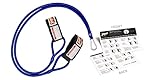
J-Bands are the baseline arm care tool for many pitchers from youth to pro. They are simple, durable, and built for daily activation and post-throw routines.
Why it helps: Hits external rotation, internal rotation, scaption, reverse fly, and more. Builds cuff endurance and scapular control without overloading joints.
Best for: Daily warm-up and post-throw, in-season maintenance, beginner to advanced.
What is included: Elastic tubing with handles, carabiner, and anchor. Adult and youth versions available.
Build quality: Proven tubing, comfortable grips, reliable anchor point for fences or doors.
Potential downsides: Not a full strength system. You will still want heavier bands for lower body and trunk training.
Coaching notes: Keep tension consistent, do not jerk reps. Control the return. Aim for 12 to 20 reps per exercise in warm-ups, 8 to 12 reps post-throw with lighter tension.
Quick routine: External rotation at 0 degrees, internal rotation, T raises, Y raises, scap retraction, diagonal patterns, 1 to 2 sets each.
Crossover Symmetry Shoulder System for Baseball and Softball
This is a premium shoulder system with color-coded cords and detailed programming. It excels for precise scap and cuff activation.
Why it helps: Clear movement sequencing targets upward rotation, posterior cuff strength, and scapular rhythm. Strong for both pre-throw and return-to-throw progressions.
Best for: Players who want guided routines and consistent cord tension. Great for teams and facility setups.
What is included: Multiple cords, attachments, and exercise charts. Options for wall mounts or portable anchors.
Build quality: High-grade cords with smooth resistance and robust carabiners. Handles are ergonomic for scap moves.
Potential downsides: Higher cost than simple bands. Requires space or a stable anchor setup for best use.
Coaching notes: Follow the activation and recovery series as written. The system’s balance of pull angles reduces compensations.
Quick routine: Scap retraction series, pull-aparts, diagonals, face pulls, low row to external rotation, 1 to 2 sets.
Driveline PlyoCare Weighted Ball Set
Plyo balls are central to modern throwing development. This set provides multiple weights for constraint drills that improve arm path and energy transfer.
Why it helps: Forces the body to self-organize. Improves decel capacity and arm speed when used with correct intent and volume.
Best for: Off-season velocity work, patterning inefficiencies, and structured return-to-throw.
What is included: Multiple soft, durable balls across a range of weights, typically from light to heavy.
Build quality: Thick skin designed for repeated wall throws and rebound drills. Good grip to maintain clean mechanics.
Potential downsides: Needs coaching or proven programs. Overuse or poor volume control can irritate elbows or shoulders.
Coaching notes: Track weekly throws, RPE, and recovery. Avoid max intent more than two to three times weekly. Match drill to specific mechanical goals.
Quick routine: Reverse throws, pivot picks, roll-ins, step backs, 1 to 3 sets each, 3 to 8 reps per drill. Follow with catch play or pen as planned.
SideWinder Pro Plus Wrist and Forearm Exerciser
This tool targets wrist flexors and extensors to build deceleration strength and protect the elbow. It is compact and adjustable.
Why it helps: Strong forearms help manage valgus stress and late-acceleration torque. It also improves grip endurance for command late in outings.
Best for: Pitchers who want a simple, repeatable way to load forearm pronation, supination, flexion, and extension.
What is included: Solid metal roller with adjustable resistance via twist tension.
Build quality: Heavy-duty construction with knurled grip. Smooth resistance without bands or plates.
Potential downsides: Can fatigue quickly if you rush. Start light to avoid medial elbow irritation.
Coaching notes: Use slow eccentrics. Finish with light soft tissue work. Two to three days weekly is enough for most pitchers.
Quick routine: 2 sets each of wrist flexion, extension, pronation, supination, 10 to 15 controlled reps.
Bodylastics Stackable Resistance Bands Set

This is a versatile tube-band system with anti-snap inner cord technology, multiple resistance levels, handles, and anchors for full-body training.
Why it helps: Stackable bands allow precise loading for rows, presses, rotations, and hip work. It supports strength training when weights are not available.
Best for: Travel days, bullpen days with light lifts, or home workouts. Useful for high school players without a full gym.
What is included: Multiple color-coded tubes, clip-on handles, ankle straps, and door anchor.
Build quality: Reinforced inner cord for safety. Metal carabiners hold stacked loads well.
Potential downsides: Heavier stacks can feel different than free weights. Mind your angles to keep tension on target muscles.
Coaching notes: Use tempos. Three seconds down, one second up is effective for rows and presses. Pair with core moves that resist rotation.
Quick routine: Half-kneeling single-arm row, chest press, anti-rotation press, split-stance RDL with band, 2 to 3 sets of 8 to 12.
UnderSun Fitness Resistance Bands Set Loop Bands
Heavy-duty loop bands provide smooth resistance for pull-aparts, hip work, assisted mobility, and loaded carries. They pack light and last with good care.
Why it helps: Easy to set up anywhere. Great for hip abduction, anti-internal rotation work, and scapular activation.
Best for: Mobility days, post-throw recovery, and lower-body activation pre-pen.
What is included: Five loop bands with increasing resistance, often with a carry bag and programming access.
Build quality: Thick latex layers for durability and smooth tension across ROM.
Potential downsides: Latex allergy considerations. Loop bands can roll if placed poorly on bare skin.
Coaching notes: Keep bands flat, not twisted. Train positions you will need on the mound, such as single-leg stability and hip hinge.
Quick routine: Banded pull-aparts, monster walks, hip airplanes with band assist, 2 sets of 10 to 15 each.
TRX PRO4 Suspension Trainer
Suspension training loads the entire chain with bodyweight tension and is joint friendly. It complements band work by hitting core and scap stability in planes that matter for throwing.
Why it helps: Closed-chain pulling, unilateral strength, and anti-rotation control without heavy external loads.
Best for: In-season strength maintenance and hotel workouts. Also a strong option for youth athletes learning trunk control.
What is included: Adjustable straps, handles, anchors, and a program library.
Build quality: Commercial-grade straps with secure locking adjusters. Handles are comfortable and grippy.
Potential downsides: Ceiling height and anchor quality matter. Technique breaks down if you choose angles that are too hard.
Coaching notes: Own the plank during every rep. No sagging ribs. Pick angles that keep reps clean.
Quick routine: TRX row, Y raise, single-leg squat to box, fallout, 2 to 4 sets of 6 to 12.
PowerNet Weighted Training Balls

These sand-filled training balls are durable for throwing drills and fieldwork. They carry different weights to challenge patterning and deceleration.
Why it helps: Reinforces clean arm action when paired with targeted drills. Builds tissue tolerance when progressed correctly.
Best for: Off-season development and structured velocity phases. Also useful for pattern resets mid-season in low volume.
What is included: A set of weighted balls with a tough outer shell and clear weight markings.
Build quality: Thick cover handles turf, wall, and net throws. Minimal bounce for safer rebounds.
Potential downsides: Needs strict volume control. Do not chase daily PR intent with heavy balls.
Coaching notes: Logsets weekly. Respect recovery days. Pair with band activation and mobility work.
Quick routine: Reverse throws, step-behind throws, constraint drills targeting specific leaks, 2 to 4 sets, low to moderate volume.
How to Use These Tools: A Simple Weekly Framework
Pre-throw warm-up blueprint 8 to 12 minutes
1. Tissue prep 1 to 2 minutes light foam rolling on T-spine and lats.
2. Mobility 2 to 3 minutes T-spine extensions over a roller, open books, hip flexor stretch.
3. Activation 4 to 6 minutes J-Bands or Crossover Symmetry series for cuff and scap. Add loop-band hip walks. Finish with 5 to 10 low-effort plyo throws if in a velocity phase.
Post-throw recovery 6 to 10 minutes
1. Light band circuit face pulls, external rotation, scap depression, 1 set each, high reps.
2. Breath work supine 90-90 breathing, 2 to 3 minutes.
3. Optional light shoulder pulley mobility if stiff. Keep volume low.
In-season strength maintenance 2 days per week
Day A TRX rows, split squats, anti-rotation press with bands, hip hinge with loop band.
Day B Single-leg RDL with band, half-kneeling press, banded pull-aparts, forearm work with SideWinder.
Keep sets at 2 to 3 with moderate reps. Leave one to two reps in reserve.
Off-season development 3 to 4 days per week
Use heavier band stacks for rows and presses. Include plyo ball work two to three times weekly. Add loaded carries with loop bands. Track weekly tonnage and respect recovery days.
Common Mistakes and How to Fix Them
Too much resistance
If reps look shaky or scapulae tilt forward, reduce band tension. The goal is quality control, not max strain.
No anchor stability
Always check anchors before pulling. Loose or unstable anchors cause poor mechanics and risk injury.
Skipping the eccentric
Control the return. The eccentric builds tissue capacity and improves joint position awareness.
Plyo ball overload
Cap high-intent sessions. Track throws and RPE. If elbow soreness persists beyond 48 hours, cut volume and reassess.
Care and Maintenance
Make your bands last
Inspect weekly for cracks and thinning.
Clean after field use with a damp cloth. Avoid harsh cleaners.
Keep out of heat and direct sun. Heat degrades latex over time.
Rotate bands so one band does not take all the load.
Sample Two-Week Starter Plan
Week 1
Mon Warm-up bands, catch play, post-throw light bands.
Tue TRX Day A, loop-band hips, SideWinder forearms.
Wed Plyo balls low volume, mobility, post-throw recovery.
Thu TRX Day B, band rows and presses.
Fri Bullpen, post-throw recovery.
Sat Mobility and breathing, light walk.
Sun Off or optional light band circuit only.
Week 2
Repeat structure. Add one extra set per lift or 5 to 10 percent total volume if recovery is good. Keep plyo volume the same. Do not stack increases in throwing and lifting in the same week early on.
FAQ Quick Hits
How often should pitchers use bands
Most pitchers do band activation every throwing day. Strength-focused band sessions are two to three days per week.
Can youth pitchers use weighted balls
Yes with supervision, low volumes, and clear technique goals. Start with very light throws and limited days per week. Stop immediately at any joint pain.
Are loop bands or tube bands better
Use both. Loops are great for hips and pull-aparts. Tubes with handles are great for rows, presses, and precise shoulder angles.
What resistance level should I choose
For arm care, pick a band where 12 to 20 reps are smooth with full control. For strength, choose a load where 6 to 12 reps are challenging but clean.
Conclusion
A smart pitcher’s toolkit is simple. Use J-Bands or a shoulder system for daily arm care. Add plyo balls for patterning and velocity phases. Build full-body strength with stackable tube bands, loop bands, and a suspension trainer. Fortify the elbow with forearm work. Progress slowly, log your work, and never ignore joint pain. The eight tools above give you everything you need to build a durable arm and a repeatable delivery in 2026.