
We are reader supported. When you purchase through links on our site, we may earn an affiliate commission. Also, as an Amazon affiliate, we earn from qualifying purchases.
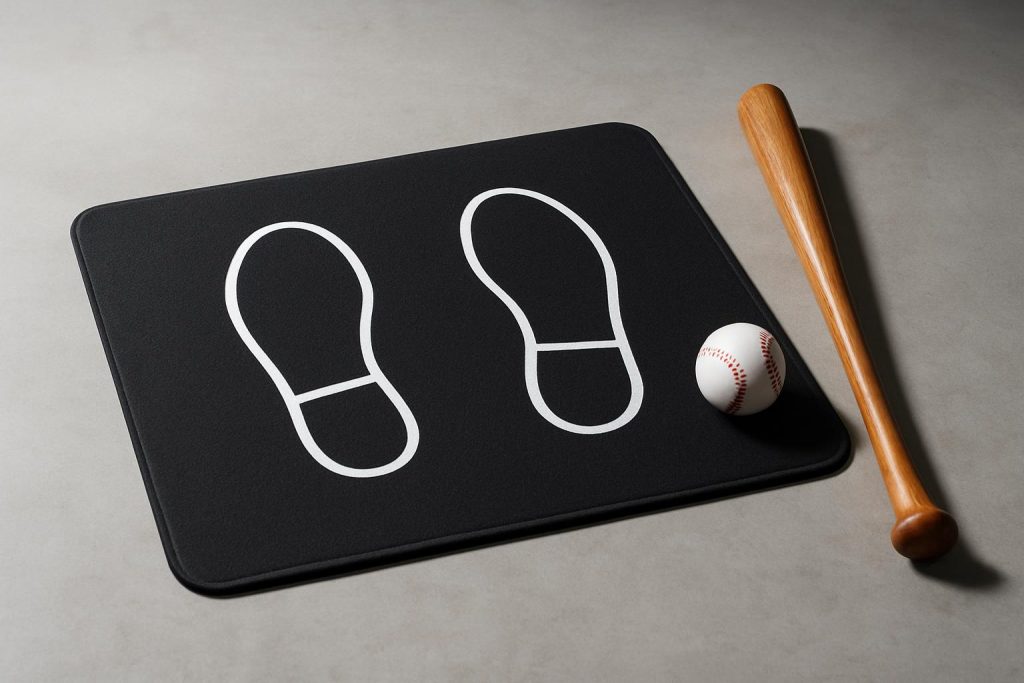
Repeatable swings start with a repeatable setup. If your feet move around from rep to rep, your stride length changes, and your contact point drifts. A good batting stance mat solves that. It gives you consistent landmarks for foot placement, stride control, and plate coverage every time you swing. In this 2026 review, I break down the best batting stance mats for building consistency, what actually matters when you choose one, and how to use a mat to lock in your mechanics fast.
Why a batting stance mat matters for consistency
Focused hitters train the same setup every rep. A stance mat speeds that up in four ways.
Foot placement and angles: Printed lines and a home plate graphic let you align both feet and check your open or closed stance instantly.
Stride length control: A visual reference for stride distance keeps your head still and your swing path steady.
Repeatable plate coverage: With a home plate in the same spot every rep, you stop guessing where to start or where to land.
Surface stability: Quality turf and backing prevent slipping, reduce wear at the box, and keep your cage floor protected.
Key buying factors that actually impact your training
Size and space fit
Three common sizes cover most needs. 3 x 5 feet for tight home spaces and backyard sessions. 3 x 7 feet for a full batter’s box feel in most cages and garages. 6 x 12 feet for full coverage behind and in front of the plate, ideal for academies and high-volume team use.
Backing and grip
Look for foam or rubber backing that grips concrete, gym floors, and cage turf. The backing should reduce slippage without leaving residue or marking.
Spike resistance
If you will train in metal spikes, pick spike-resistant turf. If not, you can go lighter and more flexible. Check your facility rules as many indoor cages prohibit metal cleats.
Lines and home plate inlay
Inlaid lines and plate graphics last longer than painted lines. For pure consistency training, you want graphics that do not fade and that are easy to see from your setup.
Portability and storage
Thicker pro mats roll up but are heavier and stiffer. Smaller mats are easier to move and store in a car trunk or equipment closet.
Durability and warranty
Look for nylon or similar high-density turf with UV resistance if you train outdoors. Pro-grade mats typically survive thousands of reps and constant tee work.
Best batting stance mats of 2026
Wibeelee 6 x 4 ft Baseball Hitting Mat

This is a compact, budget-friendly batting mat designed for individual hitters who want clear foot placement and a stable surface without committing space or money to a full cage mat. The 6 x 4 footprint comfortably covers the batter’s box area for tee work and front toss, while staying portable enough to roll up and take anywhere. The cushioned rubber surface is joint-friendly, the printed stance stripes are high-visibility, and the rubber backing does a solid job of preventing slip on concrete, turf, or garage floors.
Why it helps:
It gives hitters an immediate visual reference for stance width and foot alignment while protecting knees and ankles during repeated swings. The non-slip base removes distraction, so every rep starts from the same place without the mat creeping forward.
Best for:
Home garages, backyards, youth players, travel teams, and casual cage sessions. Ideal for tee work, soft toss, and light front toss when you need consistency but also portability.
Potential downsides:
Shorter length means limited stride space compared to pro-style 6 x 12 mats. Printed lines are helpful but not inlaid, so they won’t match the longevity of premium academy mats. Not intended for constant team-level or high-volume cage abuse.
Verdict:
If you want an affordable, portable batting mat that delivers clear alignment cues and joint comfort, this is a strong value pick. It’s not a full-cage solution, but for everyday individual practice, it does exactly what it’s supposed to do—simple, stable, and easy to live with.
PREMIUM PRO TURF Batting Stance Mat 3 x 7
For most home cages and garages, 3 x 7 hits the sweet spot. PREMIUM PRO TURF’s mat is a proven option with spike-resistant turf, 5 mm foam backing, and inlaid box lines with a home plate graphic. It rolls flat, resists slipping, and stands up to tee and soft toss work without early wear in the heel or front foot area.
Why it helps: Clear stance lines and a reliable plate image create fast alignment checks for both feet. The length lets you take a full stride without stepping off the mat.
Best for: Home training setups, small to mid-size cages, youth through varsity hitters.
Potential downsides: Not as cushioned as the thickest pro mats. Still a bit long for ultra-tight spaces.
Verdict: A dependable balance of size, durability, and price. Great pick for families and private coaches.
All Turf Mats Baseball Stance Mat 3 x 7
All Turf Mats makes a sturdy 3 x 7 stance mat with inlaid white lines and a home plate target. The foam backing keeps the mat from slipping on indoor surfaces while protecting floors. It uses dense, durable turf fibers designed to handle repetitive tee strikes and cleat traffic.
Why it helps: Consistent visual cues for both the back foot anchor and front foot landing. The inlaid graphics hold up over time so your alignment references stay sharp.
Best for: Multi-use cages, shared team facilities, and hitters who want pro-grade visuals without a 6 x 12 footprint.
Potential downsides: Slightly heavier roll than budget mats. Some users prefer a rubber underside for maximum grip on polished floors.
Verdict: Rugged build and clear lines make it a reliable mid-size training anchor for consistent setups.
PowerNet Baseball Softball Portable Hitting Mat 3 x 5

PowerNet’s 3 x 5 mat is built for portability and quick sessions. It features a home plate graphic and stance guides in a compact footprint that fits tight spaces. The backing is designed to reduce slipping while keeping the mat light enough to roll, store, and carry to the field.
Why it helps: Fast setup and teardown encourages daily reps. Simple alignment marks keep your feet honest and your stride repeatable.
Best for: Apartment garages, backyards, travel ball families, players who want a take-it-anywhere mat.
Potential downsides: Shorter length means aggressive striders may step off the front. Not the best pick for heavy metal-spike use indoors.
Verdict: An easy win for consistent work when space is limited or you need simple portability.
CHAMPRO Batting Mat with Batter’s Box Lines 3 x 5
CHAMPRO’s compact mat adds clear batter’s box lines and a plate graphic in a smaller format. The surface is designed to handle routine tee and front toss work, and the underside grips well on most cage floors. For younger hitters and indoor setups where space is tight, it is a straightforward, budget-friendly option.
Why it helps: The box lines and plate make alignment quick, which keeps reps moving and prevents setup drift from one swing to the next.
Best for: Youth players, coaches running stations, and teams needing multiple portable mats at once.
Potential downsides: Less mass and cushioning than pro-grade mats. Not ideal for heavy varsity or college-level volume.
Verdict: Solid for lighter loads and small spaces where you still want the benefit of stance and stride visuals.
All Turf Mats Softball Stance Mat 3 x 7

Fastpitch hitters need the same consistency in setup, with slight differences in plate coverage cues. This softball-specific stance mat includes inlaid lines and plate visuals suited to common fastpitch stances. The turf is dense and durable, and the foam backing stabilizes the mat for cage floors and gym surfaces.
Why it helps: Consistent foot alignment relative to the plate promotes repeatable contact points against riseballs and breaking pitches in the fastpitch zone.
Best for: Fastpitch teams and individual softball hitters who want a dedicated mat instead of sharing a baseball-only layout.
Potential downsides: Heavier than minimal travel mats. Requires a bit more care when rolling and storing to avoid creases.
Verdict: A strong fastpitch-focused choice that addresses the same alignment fundamentals while fitting softball needs.
Quick picks by use case
Best overall for programs and high volume
Wibeelee 6 x 4 ft Baseball Hitting Mat. Full coverage, spike-resistant turf, and inlaid lines that last. Ideal for academies and schools.
Best size for most home cages
PREMIUM PRO TURF Batting Stance Mat 3 x 7. Balanced footprint with clear alignment aids and dependable grip.
Best budget and portable
PowerNet Baseball Softball Portable Hitting Mat 3 x 5. Light, easy to store, and effective for daily reps.
Best for softball
All Turf Mats Softball Stance Mat 3 x 7. Consistent visuals tailored to fastpitch setups and strike zones.
How to choose the right stance mat for your space
Measure the training zone
Confirm the width and length of your cage, garage, or driveway area. Leave safe clearance at the front for full swings and follow-throughs. If you run multiple stations, two 3 x 5 mats often beat a single large mat.
Match durability to usage
Daily team work and metal spikes call for pro-grade turf with inlaid lines and robust backing. Weekly home reps can use a lighter mat as long as the backing grips well and the lines are clear.
Prioritize clear alignment visuals
Choose mats with high-contrast lines and a sharp home plate graphic. These speed up coaching cues and self-correction without needing tape or chalk.
Set up tips for immediate gains
Lock in your back foot anchor
Place the back foot on a repeatable reference point relative to the plate edge and box line. Note toe angle and distance from the plate.
Standardize stride distance
Pick a specific mark for the front foot to land. Use the front box line or create a tape dot on the mat for precision. Track if your head stays level when you land.
Mix pitch locations with the same setup
Move tee positions around the plate while keeping your stance and stride marks fixed. This cements plate coverage discipline without moving your body around.
Record and review
Video from the side and front. Check that your feet hit the same spots and that your stride lands on the same mark each rep.
Five mat-based drills to build repeatable mechanics
Drill 1: Stand-in alignment reps
Purpose: Build a fast routine to the same setup. Step in with your back foot to a set line or dot, then bring in the front foot to your chosen width and angle. Repeat 10 times between sets without swinging. Add a swing after every fifth setup to confirm the feel.
Drill 2: Stride to a mark
Purpose: Stabilize stride distance and direction. From your stance, stride to a precise mark on the mat. Freeze, check the landing, then swing. Five sets of six reps. Keep head height steady and weight centered.
Drill 3: Inside-mid-away tee ladder
Purpose: Plate coverage without moving your base. Place the tee on the inside, then middle, then away edges of the plate graphic. Keep the same stance and stride each time. Focus on matching contact points out front for inside, even with the front foot for middle, and slightly deeper for away.
Drill 4: Tempo control with front toss
Purpose: Match timing to a consistent load and stride. Mark a small dot where your toe should land. As the ball leaves the tosser’s hand, land on the dot and swing. Video the landing and compare timing across reps.
Drill 5: Two-strike adjust
Purpose: Practicing a controlled, shorter move. Create a second landing dot slightly shorter than your standard stride. Alternate between full stride and shortened stride every other pitch while keeping the same stance anchor.
Care and maintenance
Clean routinely
Brush off loose turf fibers and dirt weekly. Use a gentle vacuum on the surface. Avoid saturating with water; spot-clean as needed.
Protect the edges
Roll the mat with the turf side out to prevent creasing. Store it standing or flat on a shelf. Do not fold.
Mind your footwear
If your cage prohibits metal spikes, use turf shoes or molded cleats. Even spike-resistant mats last longer with turf shoes indoors.
Frequently asked questions
Do I need a 6 x 12 mat for real results
No. A 3 x 7 stance mat provides all the alignment benefits for most hitters. A 6 x 12 mat adds durability and full coverage for heavy team use or pro facilities.
What if my mat slides on a smooth floor
Use a non-slip underlay or thin rubber rug gripper beneath the mat. Make sure the floor is clean and dry. Avoid powders that can reduce traction.
How do I set my stance distance from the plate
For most hitters, align the inside edge of the plate with the sweet spot of the barrel path, not the handle. Start by setting the back foot so the knob points to the inside corner comfortably. Video and adjust in small increments.
Can I use it outdoors
Yes. Look for UV-resistant turf and foam backing that drains and dries easily. Store indoors when not in use to extend life.
Bottom line
Consistency comes from repeating the same setup and move every swing. A batting stance mat makes that easy. If you run high-volume sessions, the Wibeelee 6 x 4 ft Baseball Hitting Mat is the reliable workhorse. For most home and cage setups, the PREMIUM PRO TURF 3 x 7 hits the sweet spot of size, durability, and cost. Need portability or multiple stations on a budget, pick a 3 x 5 like PowerNet. For fastpitch hitters, the All Turf Mats Softball Stance Mat provides the right visuals for consistent plate coverage.
Pick a size that fits your space, prioritize inlaid lines and a non-slip backing, and commit to clear landing marks for your front foot. With those details set, your stance and stride become automatic. That is the fastest path to consistent contact, better ball flight, and a swing you can trust under pressure.