
We are reader supported. When you purchase through links on our site, we may earn an affiliate commission. Also, as an Amazon affiliate, we earn from qualifying purchases.
Ice baths are no longer a niche recovery trick. From elite clubs to local leagues, more players finish games by stepping into cold water. The reason is simple. Done right, post-game ice baths help reduce soreness, calm the nervous system, and get you ready sooner for the next session. This guide breaks down how and why they work, when to use them, when to skip them, how to set them up, and what gear makes the process easier. You will leave with clear steps and confidence to use ice baths safely and effectively.
What Is a Post-Game Ice Bath
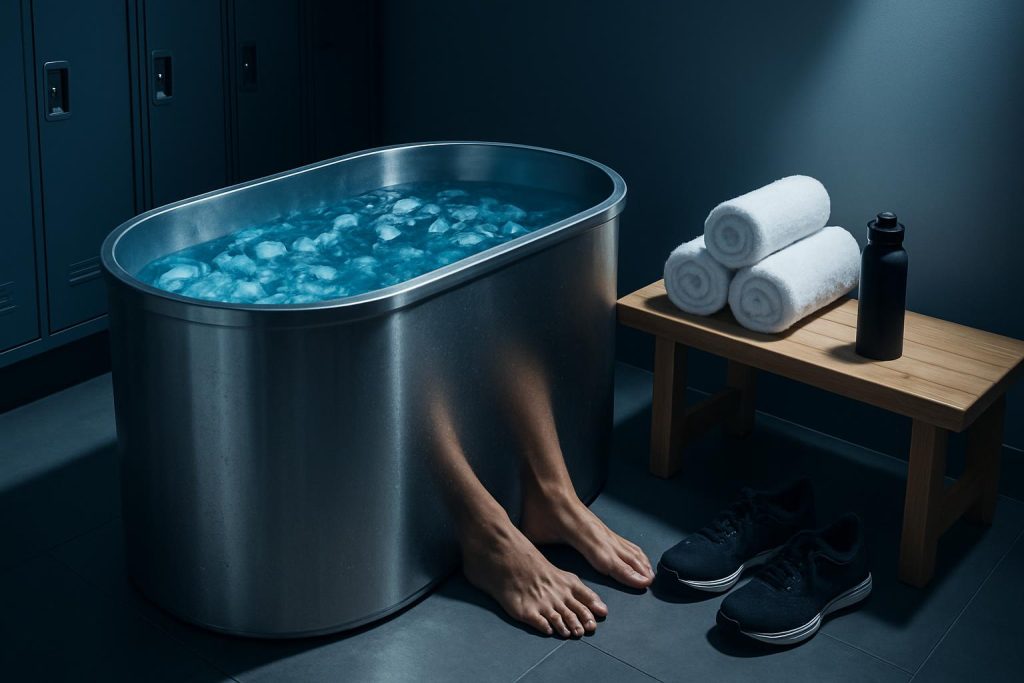
A post-game ice bath is full-body or partial-body immersion in cold water soon after competition. Typical setups use a tub, barrel, or stock tank filled with water and ice. Target temperature ranges from 10 to 15 degrees Celsius or 50 to 59 degrees Fahrenheit. Most sessions last 5 to 15 minutes, and the goal is to speed up recovery without adding stress.
Common Approaches
– Full-body immersion to mid-chest
– Lower-body immersion for field sport players
– Contrast bathing, alternating cold and warm water cycles
– Localized cold for one limb if a full bath is not practical
The Science: How Cold Water Affects Recovery
Circulation and Vasoconstriction
Cold triggers vasoconstriction. Blood vessels narrow, which helps limit fluid accumulation in soft tissues after high-intensity efforts. This supports faster resolution of swelling and pressure.
Why it helps: Less swelling and pressure means joints feel better and tissues return to baseline sooner.
Inflammation Modulation
Cold exposure reduces inflammatory signaling in the short term. This does not eliminate the adaptive process. It can, however, curb excessive inflammation that often drives next-day soreness after matches.
Why it helps: Lower soreness with fewer aches in the 24 to 48 hours after games. More comfort means better movement quality at your next practice.
Nervous System Downregulation
Cold immersion stimulates the parasympathetic nervous system once the initial shock passes. Breathing slows, heart rate drops, and the system shifts toward recovery.
Why it helps: Players relax faster after the adrenaline of competition. This can support sleep on game nights and reduce residual tension.
Perception of Soreness and Pain
Cold changes how the body perceives pain. The numbing effect and altered nerve signaling often lead to a lower rating of perceived soreness.
Why it helps: Even if muscle damage is still present, players feel better. That matters when you have to compete again within 48 to 72 hours.
Metabolite Clearance
Cold immersion may support the clearance of metabolites by modulating blood flow during and after exposure. Gentle movement in the bath can further assist.
Why it helps: Less heaviness and fatigue in the legs after repeated sprints or long minutes on the field.
Potential Trade-Offs for Adaptation
Ice baths soon after strength training can blunt muscle protein synthesis and reduce hypertrophy signals. For off-season muscle gain phases, recovery strategies should be adjusted accordingly.
Potential downsides: Frequent post-lifting ice baths may slow muscle growth. Separate cold exposure from heavy strength sessions when building size is the priority.
Core Benefits for Players
Faster Turnaround Between Matches
In tournaments, congested schedules, or back-to-back fixtures, the priority is availability and freshness. Ice baths reduce soreness and perceived fatigue so players hit baseline sooner.
Best for: In-season periods with heavy match density.
Reduced DOMS After High-Impact Play
Contact, cutting, accelerations, and decelerations produce muscle damage and joint stress. Post-game cold immersion limits the DOMS spike that often peaks 24 to 48 hours later.
Best for: Soccer, rugby, basketball, football, hockey, tennis, and similar sports.
Better Sleep on Game Nights
Competition elevates adrenaline and cortisol. Cold immersion, followed by a warm shower and wind-down routine, helps the nervous system settle.
Why it helps: Lower arousal states drive deeper sleep, and sleep is the foundation of recovery.
Support for Joints and Soft Tissues
If you carry knee, ankle, or hip irritations across a season, cold immersion helps manage flare-ups. It is not a cure, but it can reduce day-after pain levels.
Best for: Athletes with cumulative tendon or joint irritation.
Cooling After Hot Games
In heat and humidity, core temperature stays elevated longer. Cold water accelerates cooling and lowers thermal strain.
Why it helps: Safer and faster recovery in hot conditions, with less overall stress on the body.
When to Use Ice Baths
Use After Matches and High-Load Practice
When the goal is to feel better quickly and be ready again soon, cold immersion is effective. This includes long competitions, doubleheaders, or travel tournaments.
Limit After Heavy Strength Sessions
When training for muscle size or maximum strength, avoid immediate ice baths. If you still want cold exposure on those days, separate it by 6 to 8 hours or use it on rest days.
Plan Around the Competition Calendar
In-season with tight turnarounds: use more often.
Off-season strength block: use less often or time it away from lifting.
Pre-season conditioning: use strategically when soreness threatens practice quality.
When to Limit or Avoid Ice Baths
Medical Considerations
Cold immersion is not for everyone. Avoid or consult a professional if you have cardiovascular disease, uncontrolled hypertension, Raynaud syndrome, neuropathy, open wounds, recent surgery, or are pregnant.
Extreme Cold With Poor Supervision
Very low temperatures or long exposures raise risk. Do not push duration or depth if you lack experience. Have supervision for first-time use and for youth athletes.
Infection and Hygiene Concerns
Shared tubs need cleaning protocols. If sanitation cannot be maintained, use individual setups or skip the bath.
Evidence Snapshot
– Short-term recovery: many studies report lower soreness and better perception of recovery with 10 to 15 minutes at 10 to 15 C after high-intensity exercise.
– Performance next day: small to moderate benefits for repeated sprint ability and neuromuscular function when matches are close together.
– Strength and hypertrophy: immediate post-lift cold can blunt anabolic signaling and long-term muscle growth.
– Endurance and team sports: repeated use during congested fixtures helps athletes maintain session quality.
Practical Protocols That Work
Temperature and Time
– 10 to 15 C or 50 to 59 F
– 5 to 15 minutes total immersion time
– Start at the warmer end if new to cold exposure, and use the short end of the time range
Timing After Games
– Within 0 to 2 hours post-match is a practical window
– Hydrate and consume protein plus carbs before or after the bath as needed
– Do a quick warm shower afterward to rewarm and relax
Breathing and Entry
– Enter slowly to chest depth
– Use slow nasal inhales and long exhales to control the cold shock response
– Keep hands out initially if needed; add hands later as you adapt
Head and Neck
Immersing the neck can enhance cooling. Immersing the head is optional and not necessary for recovery.
Movement in the Bath
Gentle ankle pumps and knee bends improve circulation and reduce stiffness.
Rewarming
– Towel off, put on warm dry clothes
– Light mobility or a warm shower to finish
– Avoid long hot baths immediately after, which can expand blood vessels and undo the intended effect
Hygiene
– Shower before entering shared tubs
– Use a filter and sanitizing plan for tubs used by multiple players
– Replace water frequently if not filtered
Step-by-Step Setup at Home or Club
Basic Ice Bath Setup
1. Choose a tub that fits your height at seated or kneeling depth.
2. Fill with cold tap water to about two thirds full.
3. Add ice gradually and stir to reach target temperature.
4. Measure with a waterproof thermometer.
5. Keep a towel, warm clothes, and a timer nearby.
6. Step in slowly and breathe calmly.
How Much Ice to Use
– For moderate climates, 20 to 40 pounds of ice often drops water to target range in a typical 80 to 100 gallon tub.
– In hot climates, start with 40 to 60 pounds and adjust based on thermometer readings.
– Use circulation or stir periodically for consistent temperature.
Club or Team Logistics
– Assign a staff member to monitor temperatures and time.
– Rotate athletes efficiently with 5 to 10 minute blocks.
– Label tubs for lower-body only and full-body to speed flow.
– Maintain sanitation between groups.
Alternatives When a Full Ice Bath Is Not Possible
– Cold shower for 3 to 5 minutes
– Contrast shower: 60 to 90 seconds cold, 60 seconds warm, repeated 3 to 5 times
– Partial immersion in a smaller bin for lower legs
– Compression and active recovery walks combined with hydration and protein
Gear That Makes Ice Baths Easier
The following products help you build a reliable and safe cold immersion routine. Each review explains what it does, why it helps, and who benefits most.
Ice Barrel 400
This vertical barrel design lets most athletes sit in a stable position with water up to the chest. The footprint is manageable for a garage, balcony, or training room, and the included lid slows heat gain and debris. Drainage is straightforward, which matters when you use it several times per week.
Why it helps: Stable, space-efficient tub with practical depth for full-body cooling. The lid and drain simplify daily use and hygiene.
Best for: Players who want a dedicated plunge setup that fits various body sizes without needing a large stock tank.
Potential downsides: Heavier to move when filled. Cooling still depends on ambient temperature and ice unless paired with a chiller.
Active Aqua 1/4 HP Water Chiller
This compact water chiller circulates and cools the bath to a precise set point. It removes the guesswork and the recurring cost of large ice bags. Pair it with a small pump and insulated hoses for steady temperatures during multiple back-to-back immersions.
Why it helps: Consistent 10 to 15 C temperatures without constant ice runs. Ideal for warm climates and teams with multiple users per day.
Best for: Clubs, facilities, and serious home users who value precision and convenience.
Potential downsides: Higher upfront cost and requires basic setup of hoses and a circulation pump.
Inkbird Wireless Pool Thermometer IBS-P01R
Accurate temperature monitoring decides whether your session is effective. This floating thermometer with a wireless display lets you check the water at a glance, without fishing a probe into the bath. Readouts are clear, and the device tolerates cold ranges used for recovery.
Why it helps: Eliminates guessing. You get to target temperature faster and avoid exposures that are too cold or too warm.
Best for: Anyone using ice or a chiller who wants consistency and safety.
Potential downsides: Replace batteries periodically and follow sealing instructions to maintain waterproofing.
ONeill Heat 5 mm Neoprene Booties and Gloves
Extremities get cold first. Neoprene booties and gloves keep hands and feet warmer, which improves comfort without reducing the core cooling effect. This is a simple accessory that helps new users stay in the bath for the planned duration.
Why it helps: Warmer hands and feet reduce the urge to exit early, which helps you hit the full 5 to 15 minute target.
Best for: Beginners, players with cold-sensitive fingers and toes, and long sessions at the lower end of the temperature range.
Potential downsides: Slightly reduces cold exposure of extremities, which is the point for comfort, but not a downside for recovery goals.
Intex Krystal Clear Cartridge Filter Pump
Clean water reduces skin irritation and keeps a shared tub safe. A small cartridge filter pump circulates and filters debris. Combine with shock or sanitizer compatible with your tub material and follow product safety guidelines.
Why it helps: Better hygiene, less frequent water changes, and fewer interruptions during heavy training weeks.
Best for: Teams and households using the tub several times per week.
Potential downsides: Requires basic setup and periodic cartridge changes. Chemical use needs clear protocols.
WAYNE PC2 Portable Transfer Water Pump
Draining large tubs by gravity alone is slow and messy. A compact transfer pump speeds emptying and makes cleaning easier. Attach a standard garden hose, plug in, and drain to a suitable area.
Why it helps: Saves time and energy after sessions, which keeps the routine sustainable during busy weeks.
Best for: Home users and staff managing multiple tubs or regular sanitation schedules.
Potential downsides: Needs power and supervision during draining to avoid spills.
Timex Ironman Water-Resistant Timer Watch
Time in the tub matters. A simple water-resistant watch with timers and alarms helps you stick to the plan without fumbling with a phone near water. Set a countdown and relax into the session.
Why it helps: Reliable timing without distractions. Keeps exposures consistent across sessions and athletes.
Best for: Athletes who prefer a wearable timer over a separate device.
Potential downsides: Not fully waterproof for deep submersion. Keep it above the waterline during immersion.
Safety Essentials
Start Conservative
Use the higher end of the temperature range and shorter durations until you know how your body responds. Increase gradually if needed.
Supervise New Users
First-time immersions should have a coach, teammate, or staff member present. Watch for dizziness or unusual reactions.
Avoid Hyperventilation
Control breathing from the start. Slow inhales and longer exhales reduce shock responses and keep heart rate stable.
Know Red Flags
Stop the session if you experience chest pain, numbness that persists, uncontrollable shivering, or confusion. Warm up slowly and seek medical attention if symptoms persist.
Integrating Ice Baths Into a Complete Recovery Plan
Hydration and Electrolytes
Replace fluids lost during the match. Use a mix of water and electrolytes, especially in hot conditions.
Protein and Carbs
Consume 20 to 40 grams of protein and a source of carbohydrates within a few hours post-game. This supports muscle repair and glycogen replenishment.
Sleep Routine
After the bath and a warm rinse, allow time to wind down. Keep the room cool, dark, and quiet. Aim for consistent bedtimes.
Light Mobility and Walks
Gentle movement the next day helps circulation and reduces stiffness. Focus on hips, ankles, and thoracic spine.
Frequently Asked Questions
How cold is cold enough
Most players get benefits at 10 to 15 C. There is no need to chase extremes.
How long should I stay in
5 to 15 minutes. Start shorter, especially in the first few sessions.
How often should I do it
Use after heavy matches or during congested schedules. Reduce frequency during muscle gain phases.
Can youth athletes use ice baths
Yes with supervision and conservative protocols. Prioritize safety and comfort.
Is contrast bathing better
Contrast can feel better for some athletes and may help circulation. If you prefer it, use 1 minute cold and 1 minute warm for 4 to 6 rounds, finishing on cold.
Conclusion
Ice baths are a practical tool for post-game recovery when the goal is to reduce soreness, restore freshness, and be ready for the next session. The key is targeted use. Keep temperatures and times in a proven range. Use them more when matches stack up and less when you are chasing strength and size. Combine cold immersion with hydration, nutrition, sleep, and light mobility. Add reliable gear for consistency and hygiene. Do this well, and ice baths become a straightforward habit that supports performance week after week.